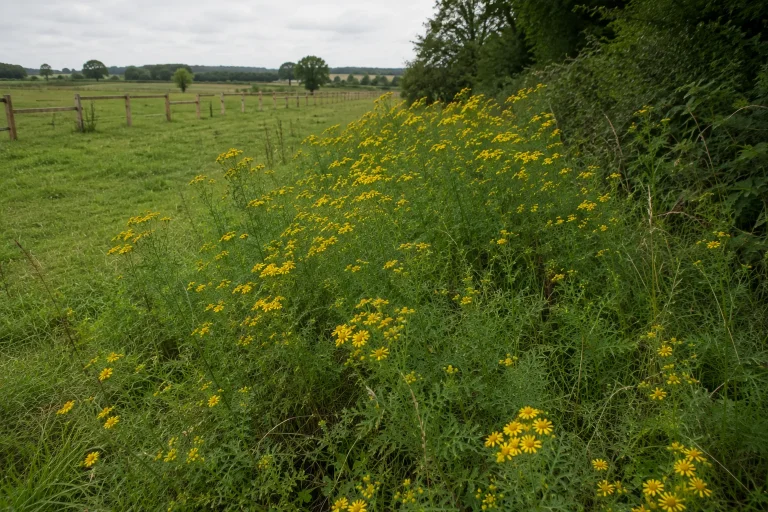
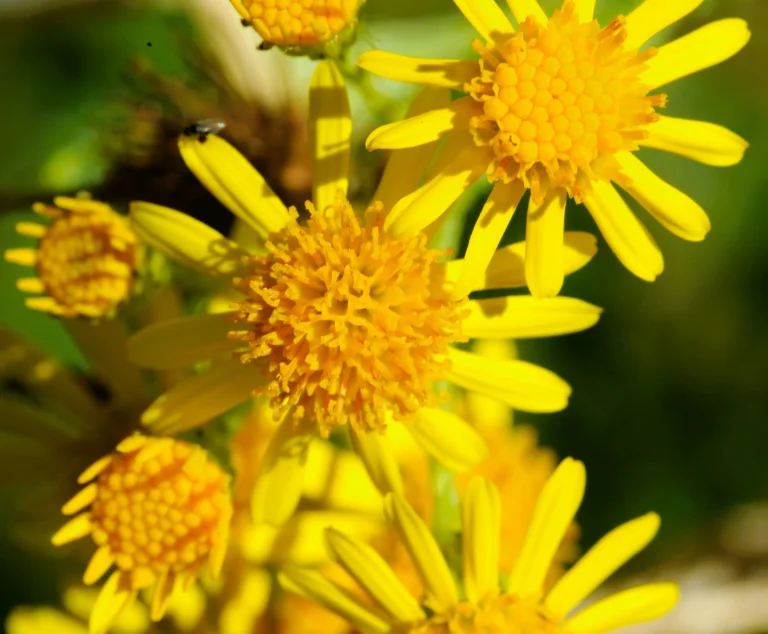
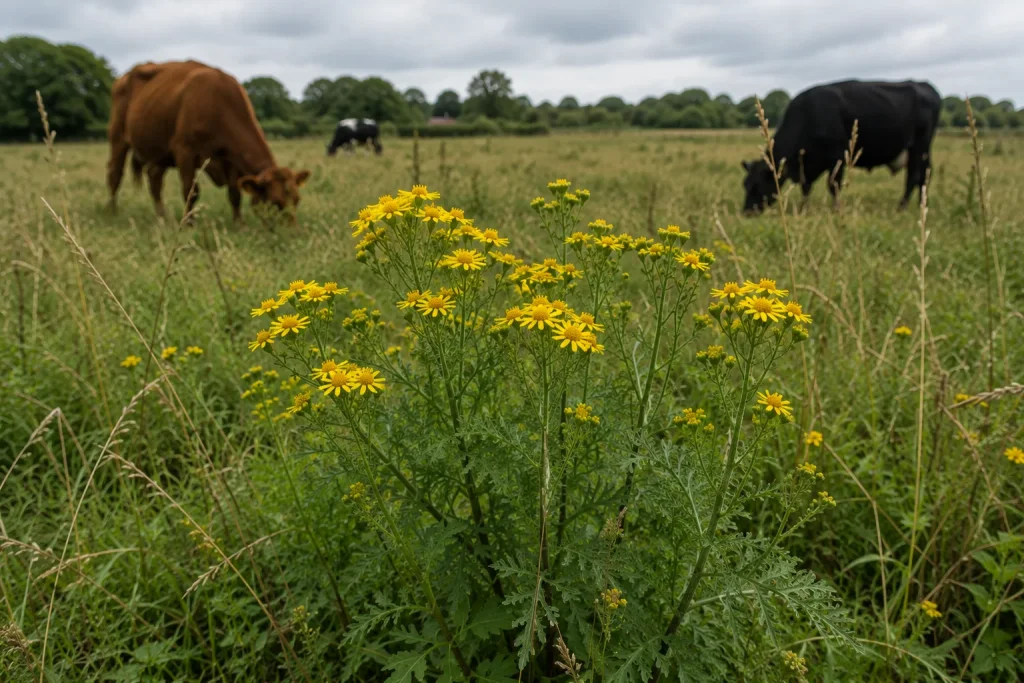
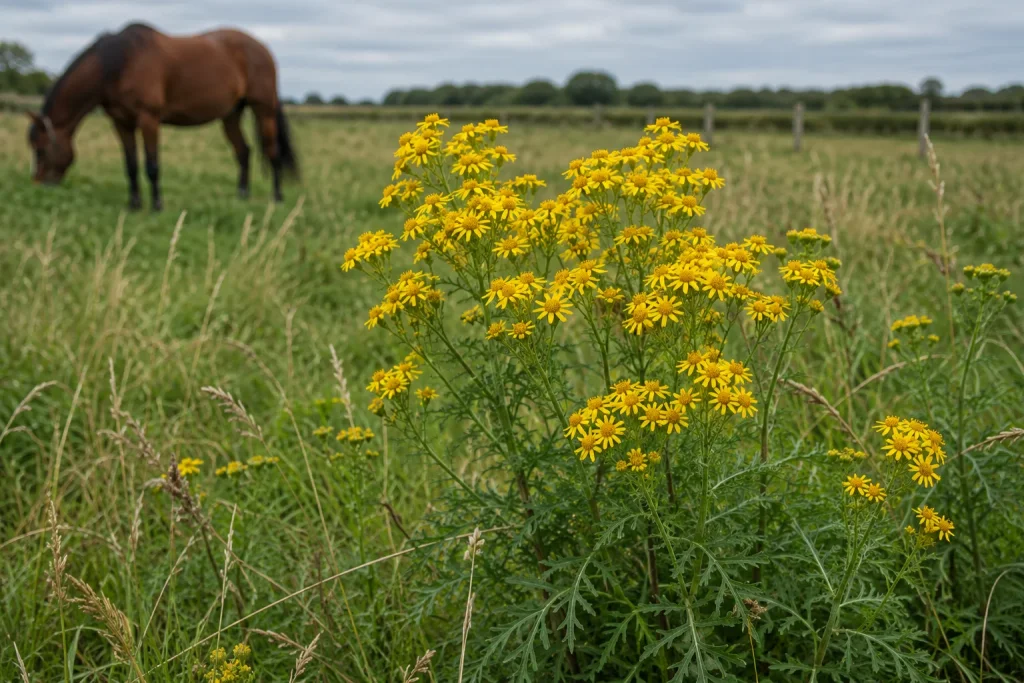
Ragwort control is not simply about removal — it is about timing, toxicity management, and preventing secondary harm.
The approach used depends on the plant’s growth stage, site use, and exposure risk to people, livestock, and neighbouring land. Incorrect handling can increase toxicity or spread, so intervention must be proportionate and controlled.
If ragwort is recurring, seeding, or attracting concern from neighbours or professionals, this service gives you a structured way to act before risk escalates.
Early-Stage Growth (Rosette Stage):
Where ragwort is identified before flowering, control is most effective and carries the lowest risk.
- Targeted application of approved systemic herbicides to young plants
- Treatment timed to interrupt growth before flowering or seed development
- Minimal disturbance of surrounding vegetation
- Reduced risk of toxin concentration compared to cutting mature plants
Early intervention limits regrowth potential and significantly reduces long-term management burden.
Established or Flowering Plants:
Once ragwort has matured, cutting or strimming alone can increase toxicity, particularly as plants die back or dry.
In these situations, control focuses on safe suppression, not mechanical clearance:
- Herbicide application timed to minimise seed dispersal
- Avoidance of cutting at stages where toxin concentration peaks
- Managed removal only where necessary and safe to do so
- Controls designed to prevent access by livestock during die-back
Site Safety & Handling Protocols:
Ragwort contains pyrrolizidine alkaloids, which are toxic to livestock and harmful if mishandled.
Professional control includes:
- Use of appropriate PPE, including gloves and protective clothing
- Avoidance of direct skin contact and contaminated material handling
- Controlled disposal of treated plant material where required
- Measures to prevent grazing, forage contamination, or public access during treatment
While ragwort toxins are primarily dangerous through ingestion, professional handling reduces unnecessary exposure and secondary risk.
Follow-Up & Regrowth Monitoring:
Ragwort rarely resolves with a single intervention.
Where regrowth risk exists:
- Follow-up inspections are used to confirm suppression
- Secondary treatments may be applied at appropriate growth stages
- Records are maintained to demonstrate reasonable ongoing management
The objective is containment and risk reduction, not cosmetic clearance.
Why Method Matters:
Incorrect timing or disturbance can:
- Increase toxicity to animals
- Widen spread through reseeding
- Create liability where none previously existed
Professional control ensures ragwort is managed safely, proportionately, and defensibly, particularly where responsibility extends beyond the immediate site.