






Himalayan Balsam

  • ProHort logo
  • Laver Leisure logo
  • Persimmon logo
  • Accord Group logo
  • Sanctuary Housing logo
  • Don-Bur logo
  • St John Ambulance logo
  • Kloeckner Metals logo

What is Himalayan balsam?

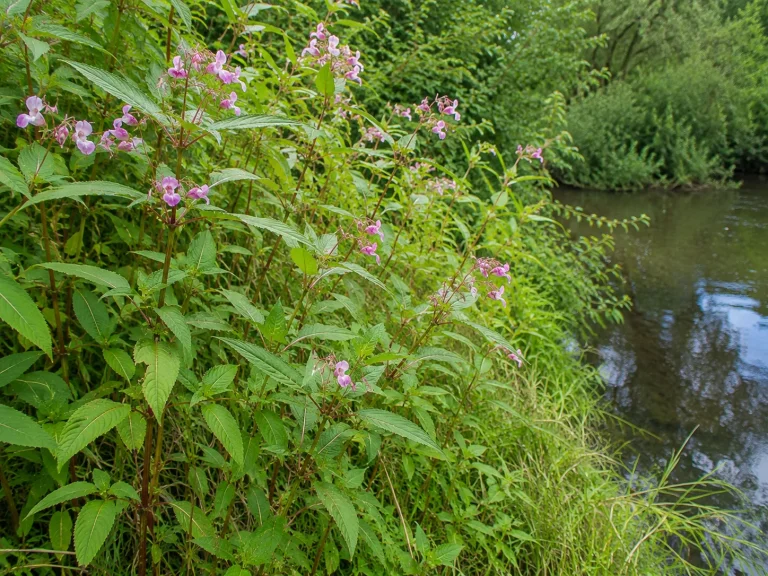
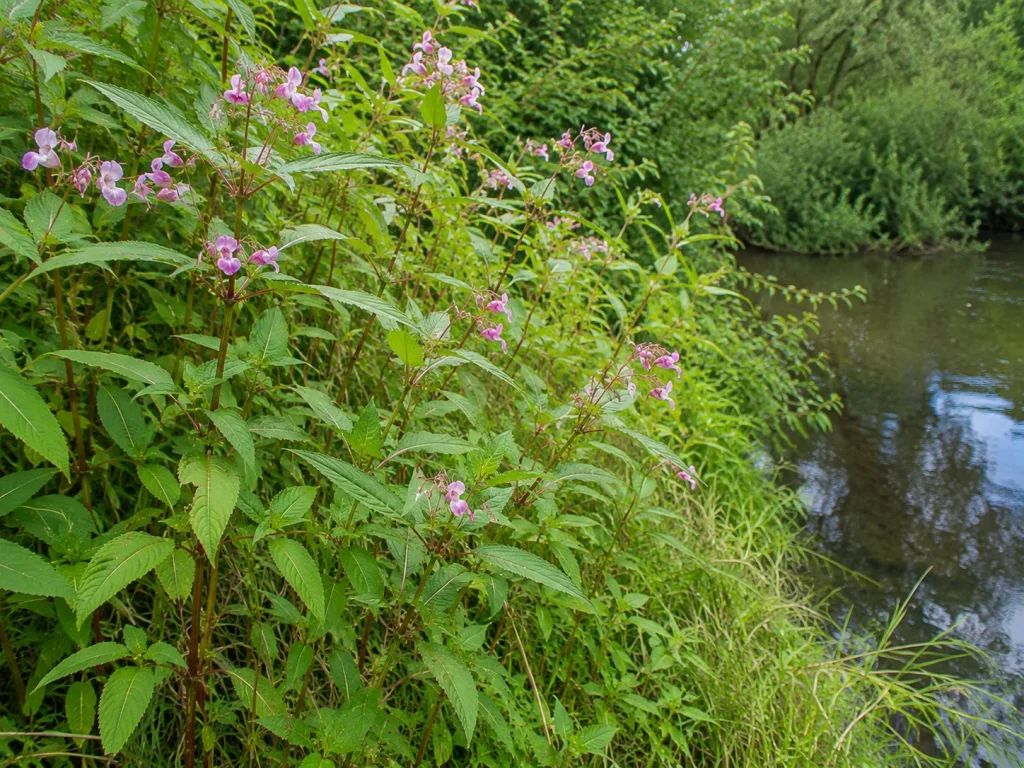
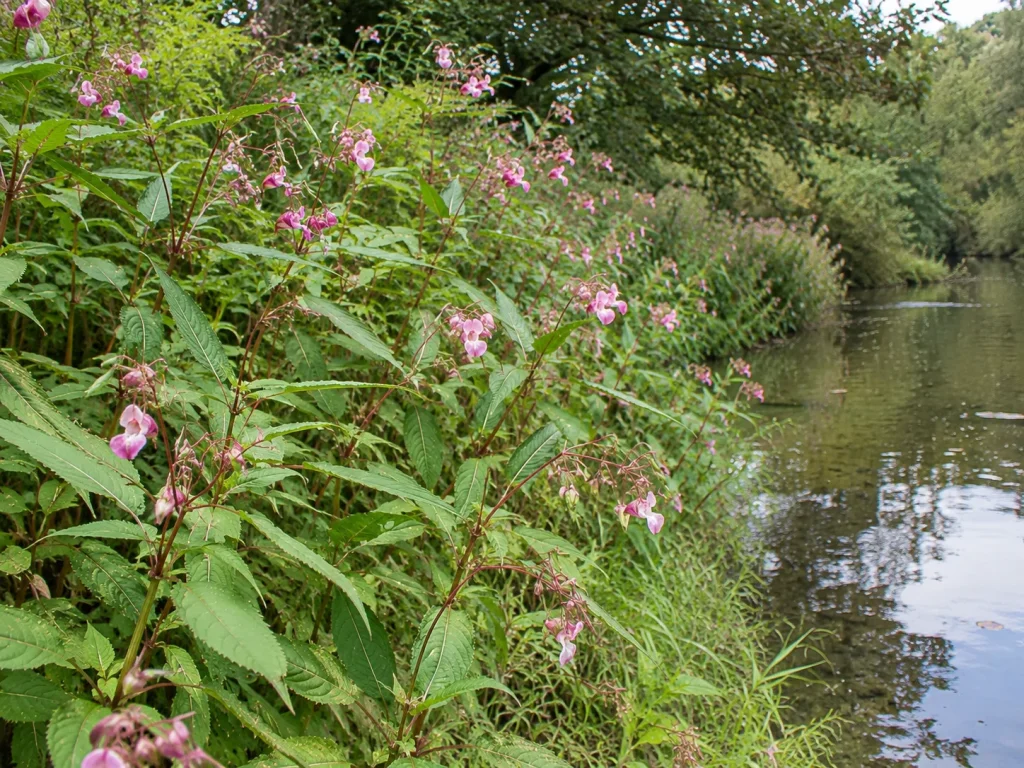
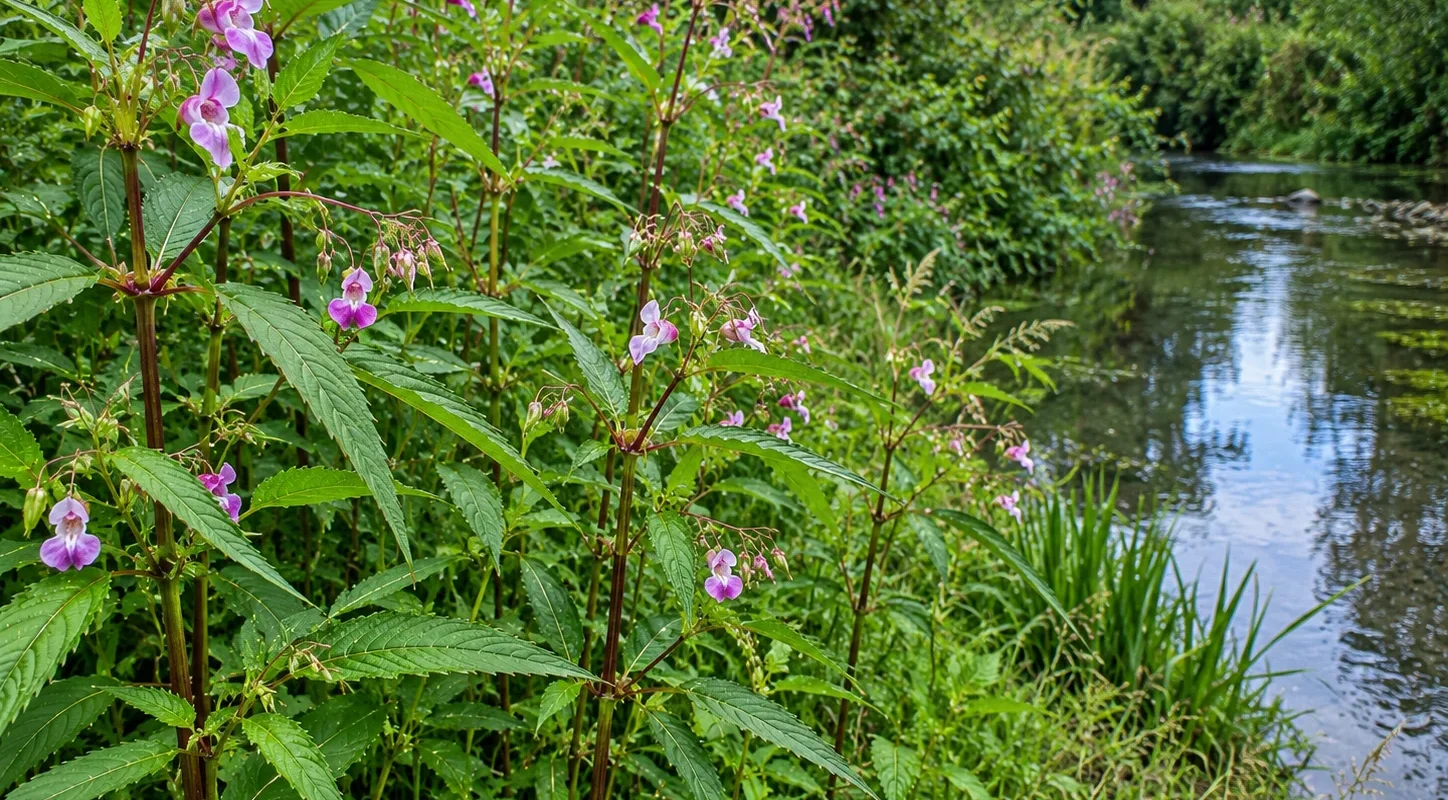
Himalayan balsam (Impatiens glandulifera) is an invasive non-native plant that grows rapidly and produces large numbers of seeds. It is commonly found beside rivers, streams and ditches, but it can also establish in gardens, woodland, fields and on development sites.

As it spreads, the plant can form dense stands that compete with native vegetation. Along watercourses, seeds can be carried downstream, making it difficult to manage affected land in isolation. After the plants die back in autumn, areas where native vegetation has been displaced may be left vulnerable to erosion.

Unlike Japanese knotweed, Himalayan balsam does not rely on an extensive underground rhizome system to spread. It reproduces mainly through seeds, which can be scattered when mature seed pods burst and carried further by water or the movement of contaminated soil.

Our approach to its removal and management considers the extent of the growth, how the land is used and whether the site connects to neighbouring land or watercourses. We can then recommend a suitable programme to reduce growth and prevent further seed production.
Himalayan balsam 7

Himalyan Balsam Identification Guide

  1. Himalayan Balsam Hero Slide 3

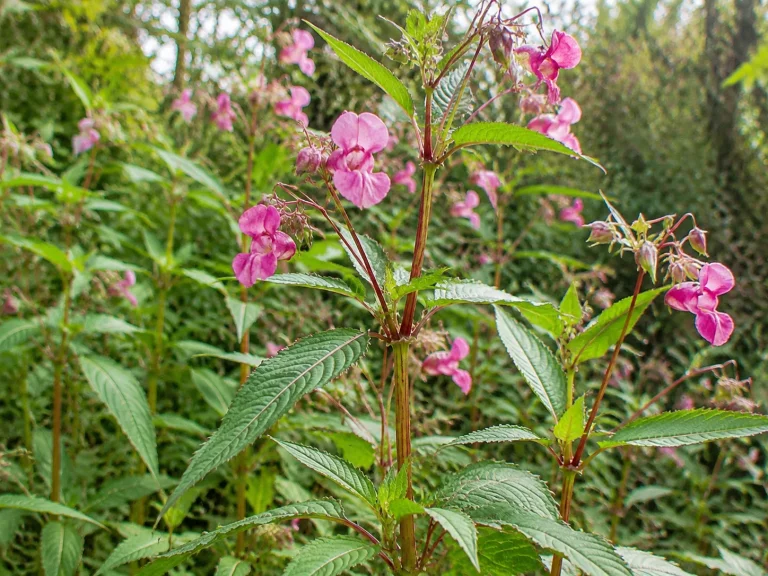
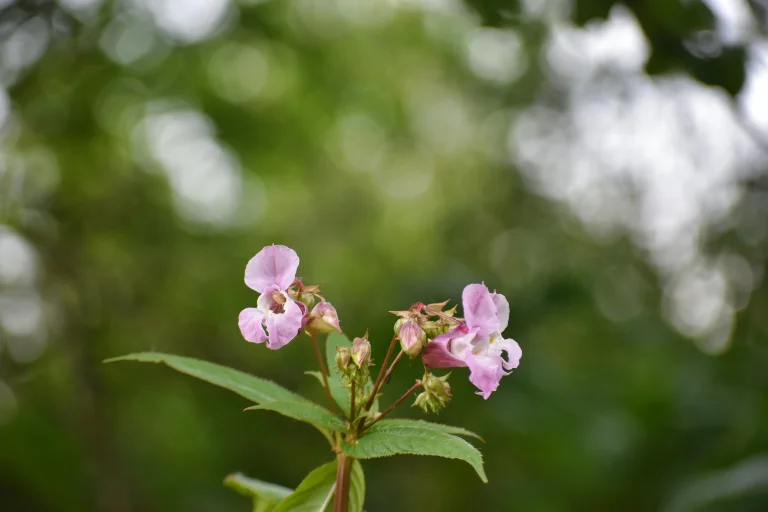
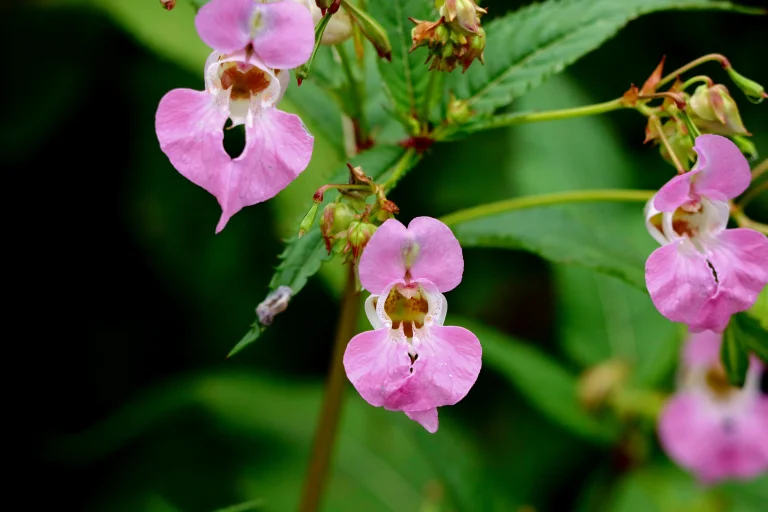
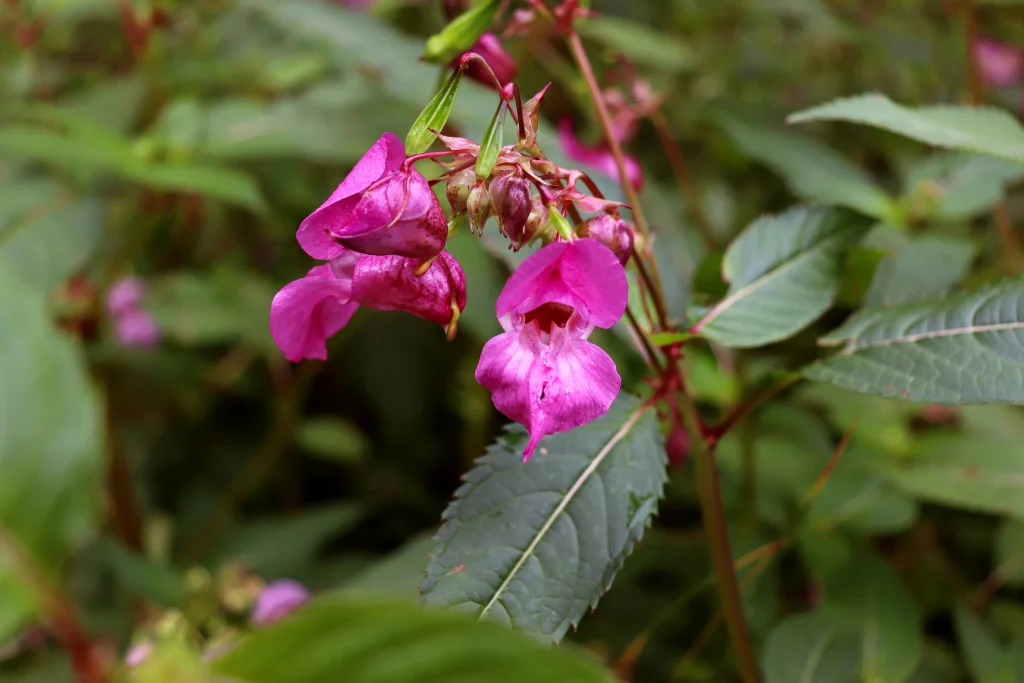
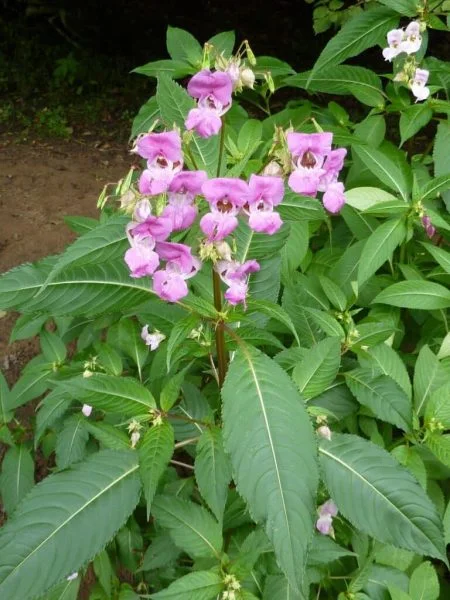
    Pink or purple flowers

    The distinctive flowers are usually pink or purple, although they can sometimes be white. They have a hooded shape and generally appear during the summer.

  2. Himalayan Balsam Stems

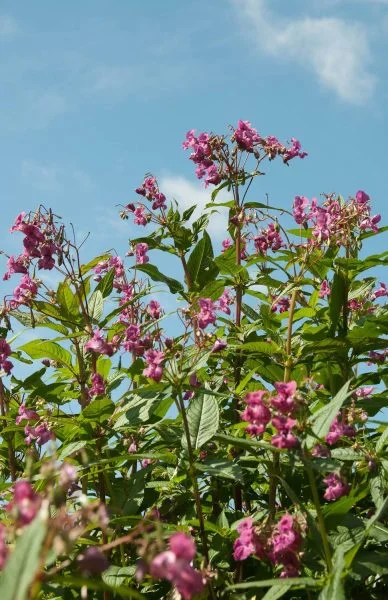
    Tall, hollow stems

    The stems are fleshy, hollow and often reddish in colour. Mature plants can reach around 2–3 metres in height.

  3. Himalayan balsam 5

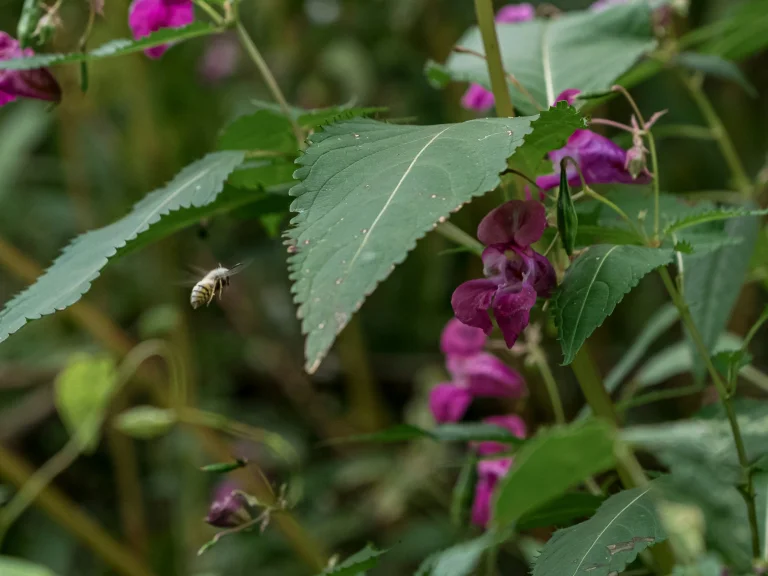
    Long, serrated leaves

    The leaves are long and pointed, with finely serrated edges. They often grow in pairs or groups around the stem.

  4. Himalayan balsam 6

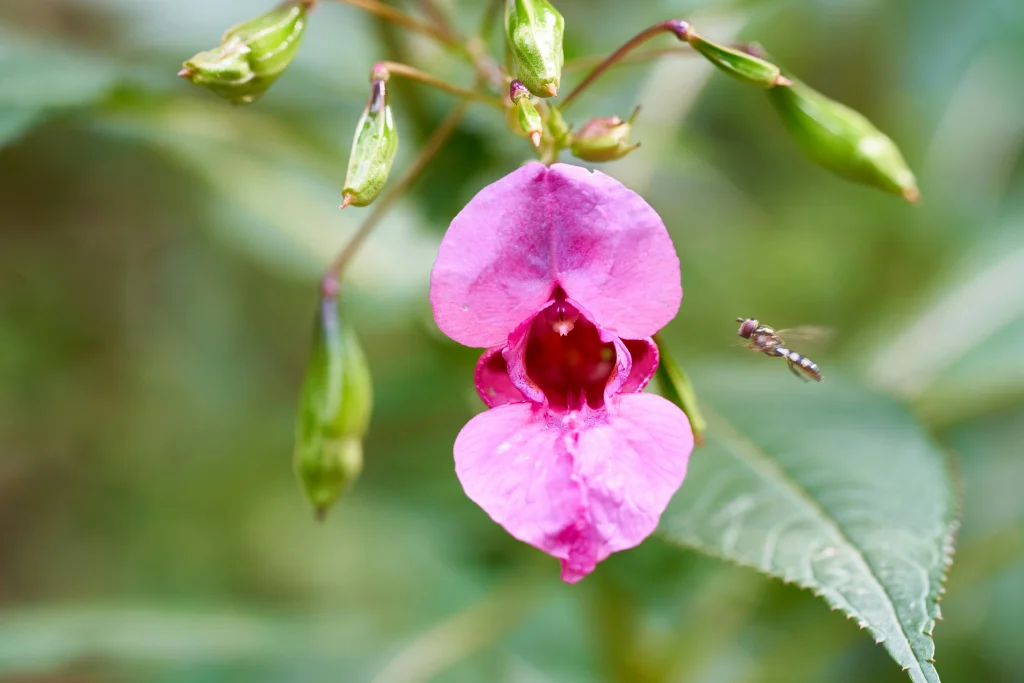
    Explosive seed pods

    After flowering, elongated seed pods develop. When mature, they can burst when touched, scattering seeds around the plant.

Young plants and dead winter stems can be harder to identify. If you are unsure what is growing on your land, send us clear photographs of the leaves, stems and flowers where available.

Facts About Himalayan Balsam

Annual plant

  • Germinates and grows during the warmer months, then dies back in autumn.

Fast growing

  • Can grow to approximately 2–3 metres in suitable conditions.

Spreads by seed

  • Mature pods burst and disperse seeds; water can carry them downstream.

Common near water

  • Often found beside rivers, streams, canals and ditches, as well as on other damp land.
Himalayan balsam 9

Why Himalayan balsam along Rivers is a concern for livestock

Himalayan balsam control starts with identifying where growth is affecting usable grazing and how it connects to the wider network of river corridors, rather than reacting to isolated patches.

  • Grazing

    Reduce effective grazing near water access points

  • Erosion

    Leave bare, erosion-prone ground after dieback

  • Welfare

    Increase uncertainty around animal welfare

  • Floods

    Spread rapidly following seasonal flooding

For livestock owners, control is about containment and early intervention, rather than managing widespread infestation later.

Himalayan Balsam Control Across River Catchments

Send Invasive Weed Details

Himalayan balsam is often found along rivers, streams and connected drainage channels. Seeds can be carried downstream or spread through the movement of affected soil, making it important to consider how individual sites connect to the wider catchment.

We provide site-specific advice and control for landowners, estates, developers and organisations managing land near watercourses across England and Wales.

  • River Trent — Staffordshire, Derbyshire and Nottinghamshire
  • River Tame — West Midlands, Warwickshire and Staffordshire
  • River Mersey — Greater Manchester, Cheshire and Merseyside
  • River Weaver — Nantwich, Winsford and Northwich
  • River Soar — Leicester, Barrow upon Soar and Loughborough
  • River Nene — Northampton, Wellingborough and Peterborough
  • River Great Ouse — Buckingham, Bedford and Huntingdonshire

We also provide Himalayan balsam services near other rivers, streams and drainage channels across England and Wales. Send us your postcode, photographs and a brief description of the affected area so we can advise on the next step.

Himalayan Balsam Removal & Control for Your Land or Property

Himalayan balsam management is typically required where:

  • Land borders rivers, streams, ditches, or floodplains
  • Sites fall under environmental stewardship or compliance obligations
  • Invasive species are identified during ecological or planning assessments
  • Unmanaged spread could affect neighbouring land or protected habitats
  • A landowner or organisation has been formally notified of responsibility

Unlike some invasive species, Himalayan balsam is rarely dealt with through removal alone. Control must be timed correctly and repeated to be effective.

What Makes Himalayan Balsam Different?

Send Invasive Weed Details

Understanding Himalayan Balsam:

  • It spreads primarily by seed dispersal, not underground rhizomes
  • Seeds can travel significant distances via water
  • Disturbance at the wrong time can accelerate spread
  • Control is seasonal and cyclical, not instant

Success depends on:

  • Early identification
  • Correct method selection
  • Repeat intervention over consecutive seasons

Our Process for Himalayan Balsam removal & management

  1. Himalayan Balsam

    Step 1

    Initial discussion

    We start by understanding your site, location, and objectives — whether this is routine land management, compliance support, or addressing a known issue.

  2. Himalayan Balsam near water

    Step 2

    Site assessment (where required)

    Where appropriate, a site assessment confirms the extent of Himalayan balsam, access considerations, and timing constraints linked to growth and seeding.

  3. Invasive Weed service Hero Slide 1

    Step 3

    Targeted management

    Control measures are implemented at the correct stage of the growing season to prevent seed dispersal and minimise regrowth.

  4. Himalayan Balsam Hero Slide 3

    Step 4

    Follow-up and monitoring

    Because Himalayan balsam relies on annual reseeding, follow-up visits may be recommended to ensure long-term control and prevent re-establishment.

Our Himalayan Balsam Management Approach

Send Invasive Weed Details

We design site-specific management programmes rather than generic removal.

Depending on your site, this may involve:

  • Initial site assessment and mapping
  • Manual or chemical control (method selected by access and sensitivity)
  • Timing interventions to prevent seed set
  • Repeat visits across growing seasons
  • Coordination with wider land or habitat management plans

Our focus is always on containment, reduction, and long-term control, not unnecessary intervention.

Himalayan Balsam near water

Our Clients and the Outcomes We Provide

Free Photo Identification
  • Who We Work With

    We regularly support:

    Landowners and estate managers
    Developers and planning consultants
    Infrastructure operators
    Local authorities and responsible bodies
    Environmental and ecological consultancies

    Our role is often to support wider compliance, stewardship, or development objectives, not just remove visible growth.

  • What We Deliver

    Our Himalayan balsam service provides:

    Site-specific advice based on land use, access, and environmental sensitivity
    Proportionate management recommendations aligned with seasonal constraints
    Timed intervention to prevent seed set and downstream spread
    Repeat control where required to address regrowth
    Clear documentation suitable for land management, compliance, or planning records

    The focus is always on achieving control that is appropriate for the site — not excessive, and not insufficient.

If you’re dealing with Himalayan balsam — or concerned it may become an issue — the most effective next step is site-specific advice.

This allows you to:

  • Confirm whether intervention is required
  • Understand what level of management is appropriate
  • Address potential issues before they escalate
  • Speak to our team to discuss your situation and determine the correct course of action
  • This shifts the situation from unknown to defined. Transactions, planning, and project decisions can proceed on the basis of confirmed information — rather than hesitation or precaution.

Where required, reporting is prepared to a standard that can be relied on by lenders, solicitors, and other professionals involved in the process.

Himalayan Balsam Frequently Asked Questions

What happens if Himalayan balsam is left unmanaged?

If Himalayan balsam is left unmanaged, it can spread rapidly through seed dispersal, particularly along waterways and disturbed land. This can increase future control requirements, affect neighbouring land, and raise questions around responsibility where spread could reasonably have been prevented.

When is the best time to control Himalayan balsam?

Timing is critical. Control is most effective before the plant flowers and sets seed, typically during the growing season. Poorly timed intervention can reduce effectiveness and allow reseeding.

Can Himalayan balsam be removed without chemicals?

Mechanical removal may be appropriate in some situations, but it must be carried out carefully and at the correct stage to avoid spreading seeds. The most suitable method depends on site conditions and access.

Will this affect neighbouring land?

If Himalayan balsam is present near boundaries or waterways, unmanaged growth can spread beyond the original site. Addressing it early helps limit impact on neighbouring land and shared responsibilities.

Is Himalayan balsam a legal or compliance issue?

Himalayan balsam is listed under Schedule 9 of the Wildlife and Countryside Act, meaning it is an offence to cause it to spread in the wild. While its presence alone does not automatically trigger enforcement, unmanaged spread can create regulatory, environmental, or land management issues — particularly where waterways or third-party land are affected.

Is one treatment enough?

In many cases, Himalayan balsam requires repeat control over successive seasons. Because it relies on seed dispersal, follow-up management is often essential to prevent re-establishment.

Does Himalayan balsam affect development or planning?

Himalayan balsam can be a consideration on development sites, particularly where environmental conditions, watercourses, or land management obligations apply. Early assessment helps avoid delays later in the process.

Can you advise if action is actually needed?

Yes. In some cases, monitoring or proportionate management is more appropriate than immediate intervention. Our role is to advise honestly based on your site and circumstances.

Book a professional survey today

Japanese Knotweed Expert operates across England and Wales, offering professional surveys, management plans and remediation services for Himalayan Balsam.

Himalayan Balsam near river

Request a Himalayan Balsam Survey

Request a Himalayan Balsam Survey

Maximum file size: 16.78MB