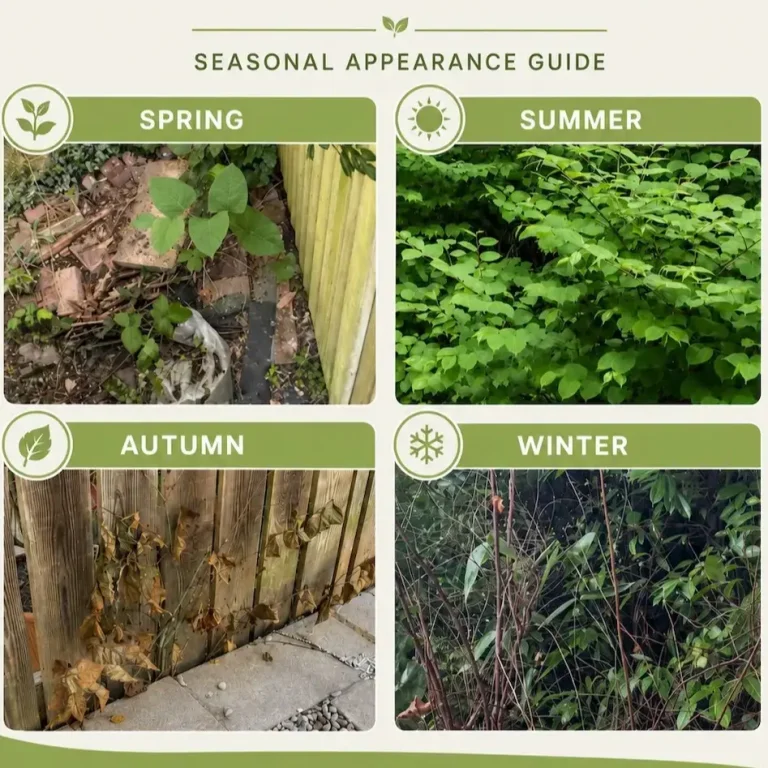
As the growing season begins to slow, knowing how to identify Japanese knotweed in autumn is essential. This is one of the most important times of year to spot the plant, as it is still visible above ground before dying back in winter and re emerging in spring.
In this guide, we explain exactly what Japanese knotweed looks like during autumn, including changes in colour, structure and growth behaviour.
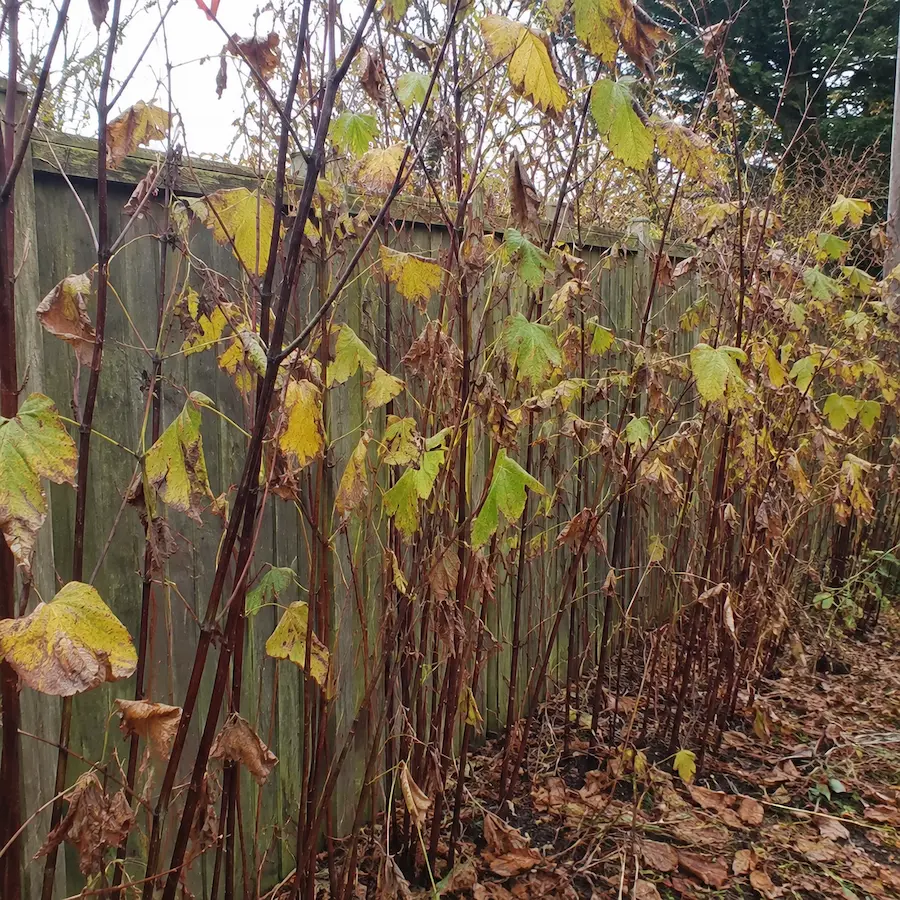
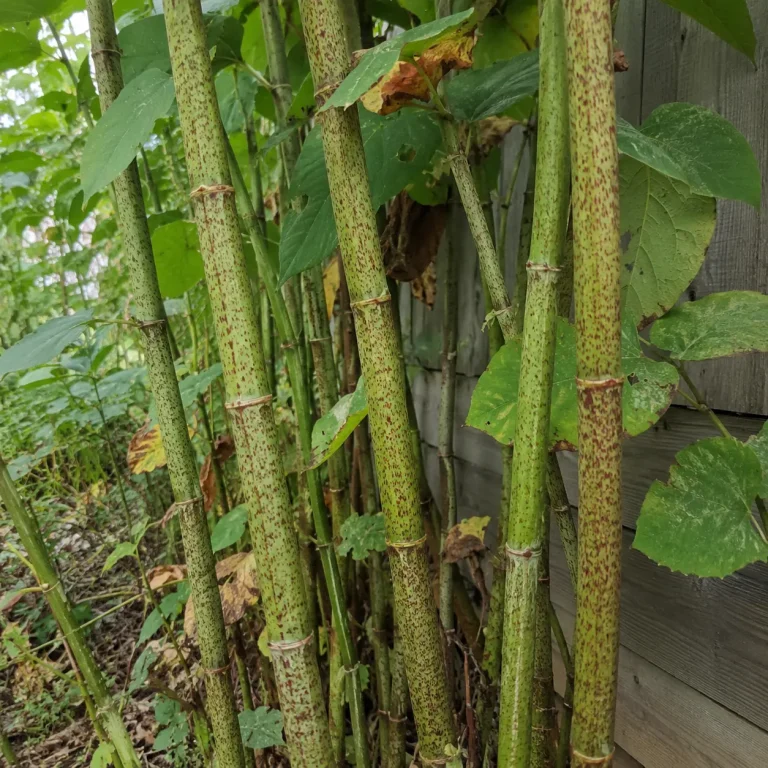
During early autumn, Japanese knotweed stems remain green with distinctive purple speckles. These stems grow in dense clusters and are often compared to bamboo due to their hollow structure and segmented joints.
At this stage, the plant can still reach heights of up to 2 to 3 metres, making it highly visible in gardens, along boundaries and on development sites.
As autumn progresses, the stems begin to harden and change colour, turning reddish brown as the plant prepares for winter dormancy. Even once the leaves have fallen, these dry canes often remain standing, which can still help with identification.
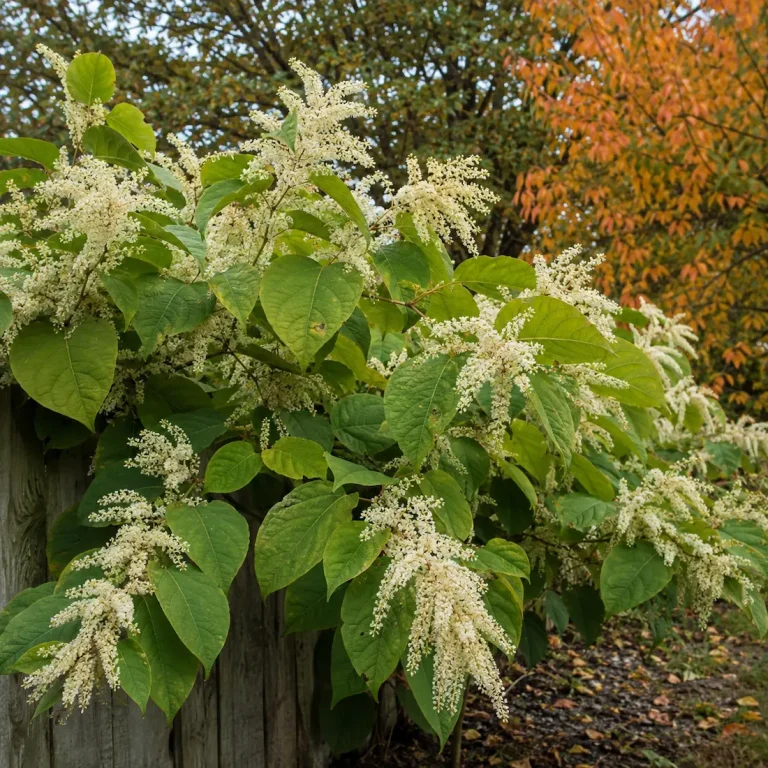
In early autumn, the leaves of Japanese knotweed are still green and retain their distinctive heart or shield shape with a pointed tip.
One of the key identifying features during this period is the presence of creamy white flower clusters, which typically bloom from late summer through to October. These flowers hang in plume like sprays and can make the plant more noticeable.
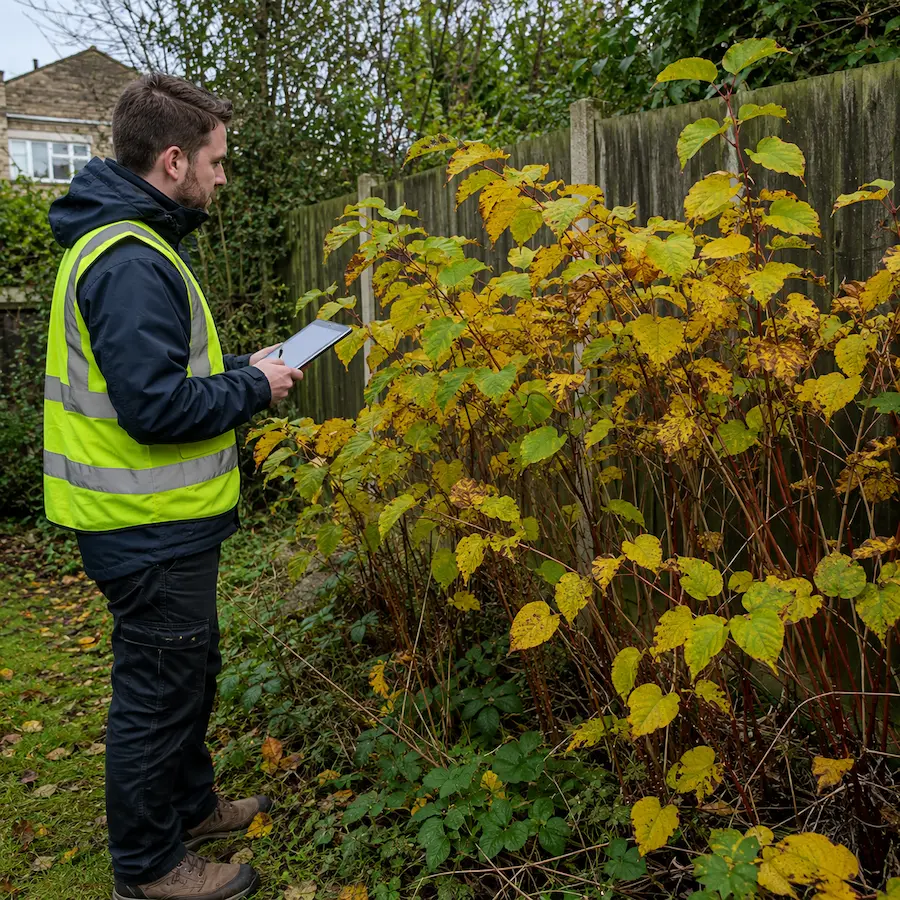
As temperatures drop, the leaves begin to turn yellow and wilt. By late autumn, most foliage will have died back, leaving behind bare stems. This seasonal change is often when the plant is overlooked, despite still being present.
The rhizome system is the most important and destructive part of Japanese knotweed. While the visible plant may die back in winter, the rhizomes remain active underground.
These underground roots can extend up to 2 metres deep and spread as far as 7 metres horizontally. This is why Japanese knotweed can affect neighbouring properties and cause structural issues if left unmanaged.
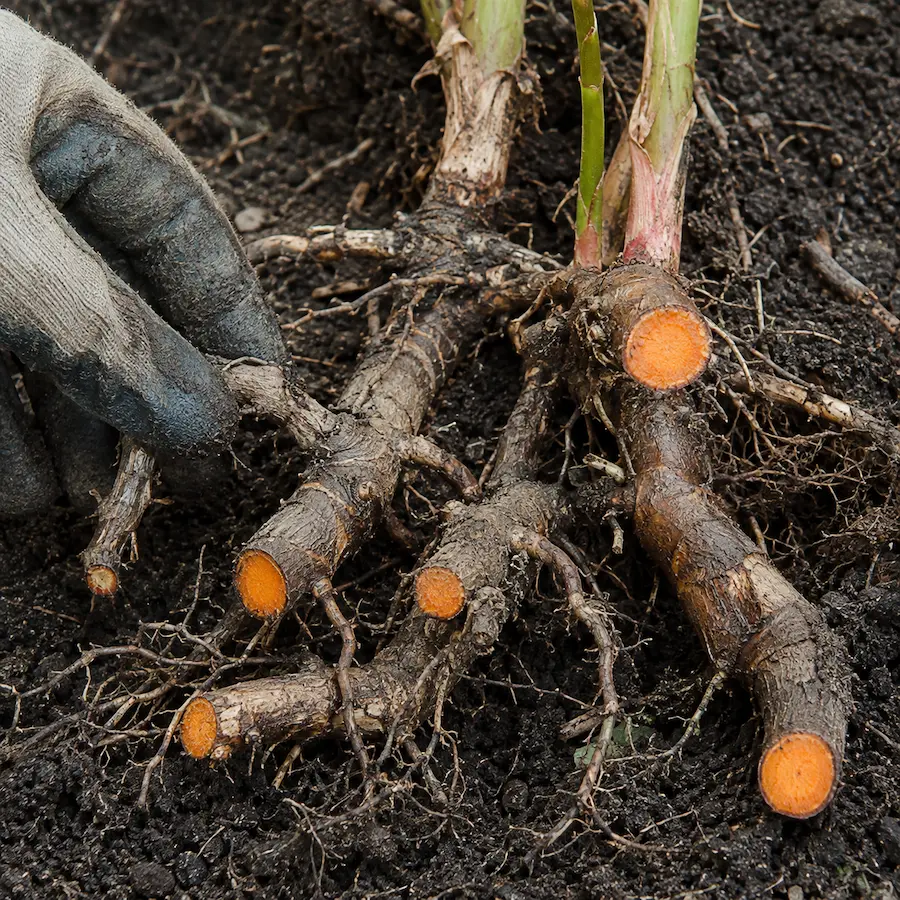
When cut open, the inside of the rhizome is a bright orange colour, while the outside has a woody, knotty appearance.
A key risk factor is its ability to regenerate. Even a very small fragment, as little as 0.7 grams, can lead to new growth. In addition, rhizomes can remain dormant in the soil for many years before reactivating.
Autumn is often one of the best times to identify Japanese knotweed before it becomes harder to detect in winter. While the plant is starting to die back, many of its key features are still visible.
From a treatment perspective, this is also a crucial time of year. Japanese knotweed herbicide treatments applied in late summer and early autumn can be particularly effective, as the plant is drawing nutrients down into the rhizome system.
Early identification at this stage can help prevent further spread and reduce long term costs.
If you suspect Japanese knotweed is present on your property, it is important not to disturb it. Cutting, digging or moving soil can cause the plant to spread further.
A professional Japanese knotweed survey will confirm identification and map the extent of the infestation. From there, a tailored management plan can be put in place, including treatment options and, where required, insurance backed guarantees to support property sales.
At Japanese Knotweed Expert, support is available from initial identification through to treatment and legal documentation, ensuring the issue is managed correctly from the outset.