
At Japanese Knotweed Expert, we do not just specialise in Japanese knotweed. We are trusted specialists in the identification, management, and eradication of invasive plant species across the UK, including three-cornered garlic.
Early identification and control are essential when dealing with invasive plants. Left untreated, species such as three-cornered garlic can spread rapidly and become difficult to manage.
Three-cornered garlic (Allium triquetrum) is a fast growing, non native plant that is becoming increasingly common in UK gardens, parks, and roadside verges, particularly in milder regions.
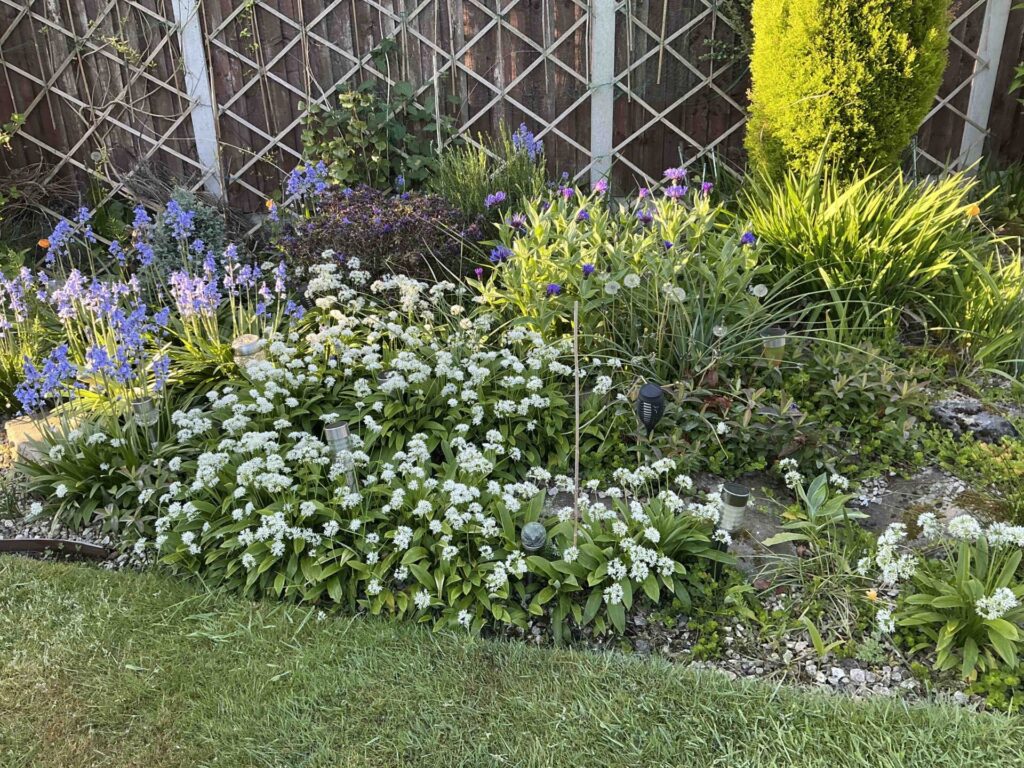
It is easy to recognise during the growing season. The plant produces narrow green leaves and distinctive white, bell shaped flowers, often with a slight green stripe. When crushed, the leaves and stems release a strong garlic smell.
Although it may appear attractive, three-cornered garlic can quickly become invasive if not controlled.
Three-cornered garlic is classified as an invasive, non native species due to its ability to spread quickly and dominate outdoor spaces.
Rapid Spread
The plant spreads through underground bulbs and by seed. Once established, it can quickly form large colonies across gardens and landscaped areas.
Outcompetes Native Plants
Three-cornered garlic creates dense ground cover that blocks light and prevents native plants from growing. Over time, this reduces biodiversity and alters the natural balance of the area.
Difficult to Remove
Removing three-cornered garlic can be challenging. Even small bulb fragments left in the soil can regrow, leading to recurring infestations.
Because of these traits, early control is essential to prevent the plant from spreading further.
Correct identification is key to effective treatment. Three-cornered garlic can sometimes be confused with other bulb forming plants, particularly in early growth stages.
Key identification features include:
The plant typically grows in spring and early summer, before dying back later in the year. However, the bulbs remain active underground and will return the following season.
Controlling three-cornered garlic requires a consistent and thorough approach. Simply cutting back the plant will not remove the underground bulbs.
Manual Removal
Careful digging can help remove the bulbs, but this must be done thoroughly. Any bulbs left behind will regrow, so this method can be time consuming and labour intensive.
Herbicide Treatment
Targeted herbicide applications can help control the plant, particularly when applied during active growth. Multiple treatments may be required to achieve long term results.
Professional Treatment Plans
For larger or established infestations, a professional invasive species management plan is often the most effective solution. This ensures the entire infestation is treated correctly and reduces the risk of regrowth.
Early intervention will always produce better results and reduce the overall cost of treatment.
We recently carried out a specialist invasive species survey in Bury, where a residential garden had become heavily overrun with three-cornered garlic.
The plant had spread across soft landscaped areas, forming dense coverage and preventing other plants from establishing. If left untreated, the infestation would have continued to expand and potentially spread into neighbouring properties.
Following our survey, we developed a tailored treatment plan to address the issue. Early intervention allowed us to implement effective control measures, restoring the garden and preventing further spread.
If you suspect three-cornered garlic in your garden or on your property, it is important to act quickly. Early identification and treatment will help prevent the plant from spreading and reduce long term costs.
Our team can provide:
Get in touch today to arrange a survey and take the first step towards controlling three-cornered garlic on your property.