
If you’re buying or selling a residential property in Somerset, Japanese knotweed, as an invasive plant species, usually comes to light during a survey or professional inspection. It’s rarely spotted through routine observation and is generally addressed as part of the formal due diligence process.


Most people don’t actively look for Japanese knotweed. It usually comes to light during due diligence—when a survey flags a potential issue, a buyer seeks reassurance, or a lender requests confirmation. At that stage, managing uncertainty can be more important than managing the plant itself.
Residential properties in Somerset range from older village homes and semi-rural plots to modern suburban developments. In all cases, Japanese knotweed is treated as a formal due-diligence matter, confirmed through professional assessment rather than assumed to be present.
The key to a smooth process is clarifying any uncertainty early, before it can impact plans or decision-making.
In Somerset, knotweed concerns typically surface during survey inspections, rather than being assumed from local conditions.
Common trigger points include:
Delays or hesitation are usually linked to incomplete or unclear information rather than the presence of the plant itself.
Addressing Japanese knotweed questions early allows them to be managed efficiently, without disrupting the transaction. If queries arise later, even minor issues can trigger extra checks and potentially slow progress.
In Somerset property transactions, the main concern isn’t the plant itself—it’s how quickly and clearly the relevant information is provided.
Clear evidence early preserves options later.
| Situation | Why clarity is needed |
|---|---|
| Selling a property | Early documentation supports buyer confidence |
| Buying a property | Early clarity reduces the chance of unexpected enquiries or delays |
| Land or development sites | Assessments and documented findings help manage expectations and provide transparency |
Japanese knotweed does not automatically prevent property sales in Somerset when assessed and documented appropriately.
However, where early clarity is lacking, additional enquiries may arise, potentially affecting transaction timing.
We provide professional Japanese knotweed surveys, treatment and removal services throughout Somerset, including Bath, Taunton, Weston-super-Mare, Bridgwater, Frome and surrounding areas, as well as nearby locations in North Somerset, Wiltshire, Wells, Yeovil, Glastonbury and the surrounding towns and villages.
If Japanese knotweed has been mentioned—or you suspect it may be present—the most effective next step is to obtain site-specific advice tailored to your situation, rather than relying on assumptions. If present, treatment and management plans can be arranged to prevent the spread of the Japanese knotweed infestation.
We establish whether a formal Japanese knotweed assessment is actually needed, based on your specific situation rather than assumptions.
We advise on what type of reporting would be appropriate, proportionate and acceptable to lenders, solicitors or planners.
By dealing with likely questions at the right stage, we help prevent delays, disputes or last-minute requests later in the process.
Handled early, knotweed becomes a managed factor, not a lingering constraint.
A private residential property in Somerset with a single Japanese knotweed stand estimated at under three years old.
Early survey enquiries raised the need for documented evidence to support the transaction.
A professional assessment confirmed the Japanese knotweed stand, and a monitored herbicide treatment programme was documented to provide early clarity for all parties.
The documented approach ensured questions were addressed promptly, allowing the transaction to proceed, with treatment costs of £5,395.50 + VAT.
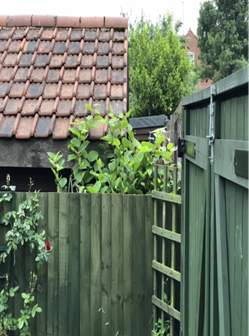
Yes. We carry out Japanese Knotweed excavation and removal across Somerset, including Bath, Taunton, Weston-super-Mare, Yeovil, Bridgwater, and Frome. We work on residential, commercial, and development sites, handling both small gardens and larger plots.
Japanese Knotweed is increasingly found across Somerset, particularly along river valleys, canal banks, brownfield sites, and older industrial areas. Properties near waterways or historic farm and industrial land are especially at risk.
Excavation is often preferred in Somerset when:
A property sale or mortgage is planned
Knotweed is close to buildings, walls, or drainage systems
Development, landscaping, or construction work is scheduled
Excavation removes the plant and contaminated soil completely, providing a permanent, fast solution.
All excavated knotweed is classified as controlled waste under UK law. We transport it using licensed waste carriers and dispose of it at approved landfill facilities, ensuring full compliance with Somerset Council regulations and national guidelines.
Before any excavation, we perform a site-specific risk assessment, particularly in densely built towns or areas near shared boundaries, footpaths, or rivers. Work is carefully managed to prevent the spread of knotweed and minimise disruption.
Yes. All excavation projects in Somerset can include a long-term company guarantee, with the option of an insurance-backed guarantee. These are widely accepted by mortgage lenders, surveyors, and solicitors, offering peace of mind for property transactions.