


Industrial and redevelopment land in Berkshire is often shaped by historic land use, waterways, and adjacent industrial plots. Many sites occupy environments where what lies beneath the surface directly affects feasibility, sequencing, and planning considerations.
On these sites, Japanese knotweed is identified through professional assessment rather than assumption. The key focus is how any presence interacts with site constraints, neighbouring land, and project programmes.
Where uncertainty exists regarding knotweed, it can introduce planning scrutiny and complicate feasibility reviews. Early identification ensures that management and planning decisions can proceed with clarity and proportionate control.
Sites in Berkshire often sit within industrial or previously developed areas, with proximity to waterways and sensitive neighbouring land.
Japanese knotweed is typically identified during:
The focus is on understanding constraints and site interactions rather than removal in isolation.
Early identification allows responses to be integrated into planning and site management. Late identification can result in additional scrutiny, reactive decision-making, or delays — particularly where neighbouring land, watercourses, or sensitive site features are involved.
For project teams and landowners in Berkshire, the primary concern is clarity: knowing the extent, boundaries, and impact on planning obligations ensures proportionate responses.
Japanese knotweed does not automatically prevent use, sale, or redevelopment of land in Berkshire when assessed and managed appropriately.
Unmanaged or undocumented cases can attract increased scrutiny from planners or environmental assessors. Clear assessment and documented management allow proportionate control, supporting planning compliance and feasibility.
If Japanese knotweed has been identified or flagged as a potential constraint on your Berkshire site, the most effective next step is site-specific advice tailored to the context and stage of your project.
We establish whether a formal Japanese knotweed assessment is actually needed, based on your specific situation rather than assumptions.
We advise on what type of reporting would be appropriate, proportionate and acceptable to lenders, solicitors or planners.
By dealing with likely questions at the right stage, we help prevent delays, disputes or last-minute requests later in the process.
Addressing the position early allows decisions to move forward with clarity rather than assumption.
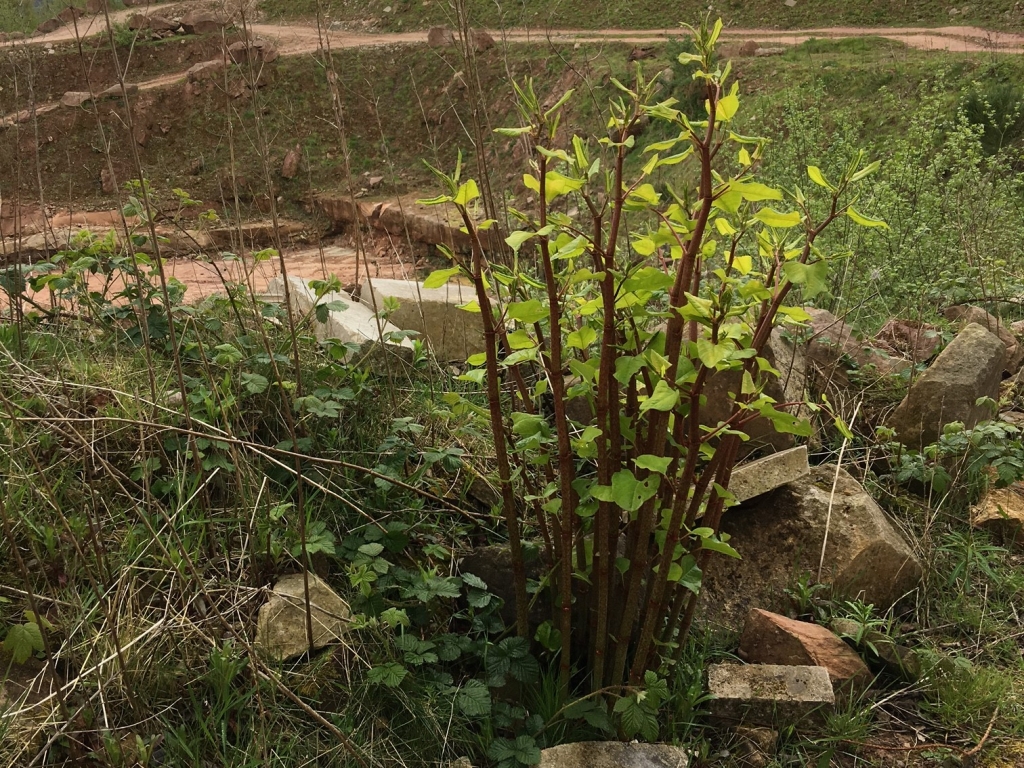
An industrial site in Berkshire with a Japanese knotweed stand averaging 2 m in height, located alongside a waterway and within 50 m of neighbouring industrial plots.
The proximity of the stand to sensitive areas created potential for cross-site spread, contamination, and planning scrutiny if left unmanaged.
Professional assessment recommended establishing exclusion zones with fencing and clear signage, restricting access, and monitoring for fly tipping. These precautions ensure any subsequent control or monitoring is effective while documenting site management for planning purposes.
With these measures implemented, the site’s knotweed risk was formally defined, reducing the likelihood of cross-boundary spread and providing planners and project teams with confidence for ongoing feasibility and redevelopment decisions. (Estimated management cost: £12,118.50 + VAT)
Yes. We carry out Japanese Knotweed excavation and removal across Berkshire, including Reading, Slough, Maidenhead, Windsor, Bracknell, and Wokingham. We handle residential gardens, commercial sites, and redevelopment land of all sizes.
Japanese Knotweed is found throughout Berkshire, particularly near riverbanks, canals, railway lines, brownfield land, and older urban developments. Properties near historic industrial sites or rivers are especially at risk.
Excavation is often chosen in Berkshire when:
A property sale or mortgage is being arranged
Knotweed is close to buildings, walls, or drainage systems
Construction, landscaping, or redevelopment is planned
Excavation provides a fast and permanent solution, removing all affected soil and plant material.
All removed knotweed is classified as controlled waste under UK law. It is transported by licensed waste carriers and disposed of at approved landfill facilities, fully compliant with Berkshire County Council and national regulations.
Before excavation, we perform a site-specific risk assessment, particularly in densely built urban areas, terraced housing, and properties near shared boundaries or public land. Work is carefully managed to prevent spread and minimise disruption.
Yes. All excavation projects in Berkshire can include a long-term company guarantee, with the option of an insurance-backed guarantee. These are widely accepted by mortgage lenders, solicitors, and surveyors, providing reassurance for property transactions.