
Targeted Himalayan balsam control to protect grazing land, livestock safety, and river-connected pasture across the River Trent catchment.


Himalayan balsam is widespread along the River Trent and its connected tributaries, where it spreads rapidly through flooding, seed movement, and disturbed riverbanks.
For livestock owners, the risk is not limited to a single field. Once established along a watercourse, Himalayan balsam can reappear year after year, reducing usable grazing near rivers, ditches, and low-lying pasture.
Early, catchment-aware control helps protect grazing quality, livestock access, and long-term land condition, while reducing the risk of reinfestation downstream.
Speak to Our Team to discuss Himalayan balsam control along the River Trent catchment.
Himalayan balsam thrives in the moist, disturbed conditions common along the Trent floodplain. While it is not classed as a highly poisonous plant, it is unsuitable for grazing and problematic on livestock land.
Reduce effective grazing near water access points
Leave bare, erosion-prone ground after dieback
Increase uncertainty around animal welfare
Spread rapidly following seasonal flooding
For livestock owners, control is about maintaining reliable, safe grazing, not reacting once land quality has already declined.
| Livestock | Interaction with Himalayan Balsam |
|---|---|
| Dairy | Wet pasture and riverside drinking areas are most affected; early control maintains consistent pasture availability. |
| Beef | Low-lying or marginal land benefits from reducing erosion after seasonal dieback. |
| Equine | Pasture edges near the river require attention to maintain confidence in forage quality. |
Along the River Trent, the process for Himalayan Balsam control focuses on understanding how floodplain grazing land connects to the wider river system, rather than treating isolated areas.
Initial call to assess suitability.
Review extent and location of growth across riverside and low-lying pasture.
Prioritising flood-affected margins and access points. Providing clear, proportionate work based on seasonal risk.
A 3-year company backed guarantee.
This approach keeps control proportionate, practical, and focused on livestock needs.
Manual control is focused on affected areas adjacent to watercourses, where access, bank stability, and environmental sensitivity require a low impact approach. This allows vegetation to be removed without disturbing soil or increasing the risk of downstream spread.
Intervention is timed to occur before flowering, preventing seed production and significantly reducing the risk of further dispersal. Correct timing is critical, as late season disturbance can unintentionally increase spread.
Effective control often requires repeat visits across multiple growing seasons to address regrowth and newly emerging plants. Follow up work ensures long term suppression rather than short term cosmetic clearance.
Where infestations span multiple ownerships along a shared watercourse, coordinated management is essential. Treating isolated sections alone is rarely effective, as untreated upstream sources can quickly re infest managed areas.
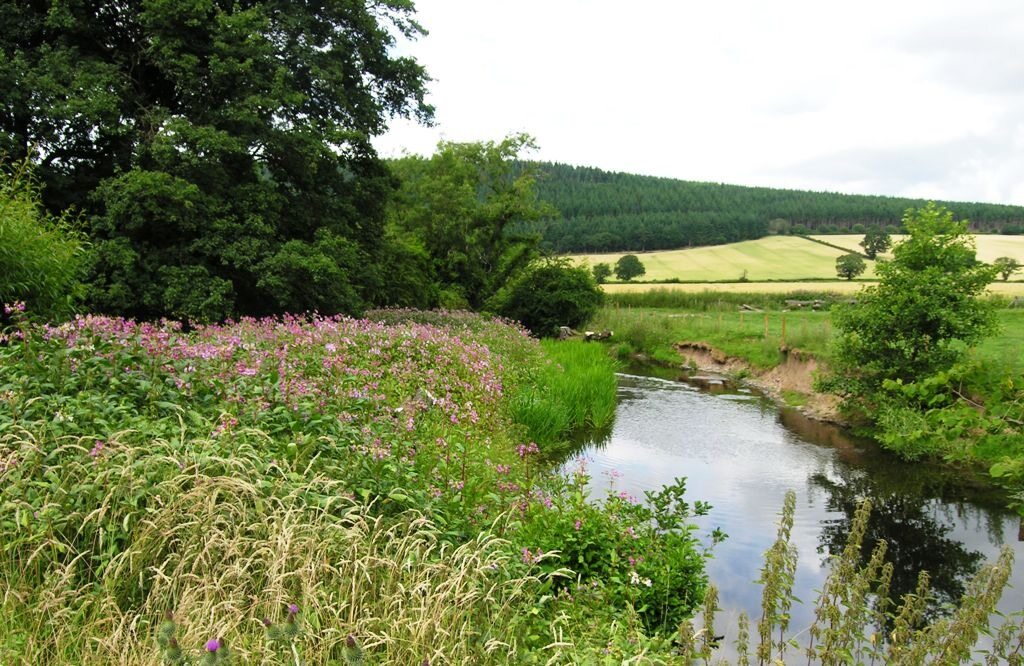
Himalayan balsam is not classed as highly poisonous like ragwort. However, it is unsuitable for grazing and can displace safe forage, which is why control is recommended on livestock land.
Yes. Because seeds spread easily via water, Himalayan balsam can reappear following flooding or upstream growth. Catchment-aware control helps reduce reinfestation.
Yes. Even if livestock avoid the plant, it can reduce available grazing, dominate field margins, and leave bare ground after dieback.
Control is most effective before flowering and seed set, typically during the main growing season. Early intervention reduces spread and limits repeat management.
While most spread along the River Trent catchment occurs downstream via water movement, Himalayan balsam can also spread locally through machinery, livestock movement, and disturbed river margins. This is why control along the River Trent often focuses on both upstream and local river edges, not just downstream land.
Yes. Because Himalayan balsam spreads through the connected River Trent system, isolated removal on a single field often leads to reinfestation. Catchment-aware control along the River Trent helps reduce repeat growth year after year.