
Giant hogweed poses a serious risk to public health. Contact can cause severe skin burns and long-term injury — particularly where plants are accessible to the public, residents, or workers.
From a suspected plant in your garden to an infestation on managed land, send photographs for an initial free identification.


Avoid touching or disturbing the plant. Keep children and pets away, and do not cut or strim suspected giant hogweed. Its sap can make skin extremely sensitive to sunlight, causing serious burns and blistering.
If contact occurs, wash the affected skin immediately, keep it out of sunlight and seek medical advice. Our site survey is for identification purposes and is not an emergency medical service.
Identifying the plant is the first step towards understanding whether control is needed and how urgently it should be addressed. Where giant hogweed is confirmed, the appropriate response depends on its extent, location and the risk of contact or spread.
Our free photo identification service can help establish whether the plant appears to be giant hogweed. Where photographs are inconclusive, or a detailed assessment is needed, a professional survey confirms the findings and informs the recommended management approach.
Giant hogweed (Heracleum mantegazzianum) is a large invasive plant in the carrot family. Mature flowering plants can reach around five metres tall, but young plants are much smaller. Height alone is not enough to identify it.
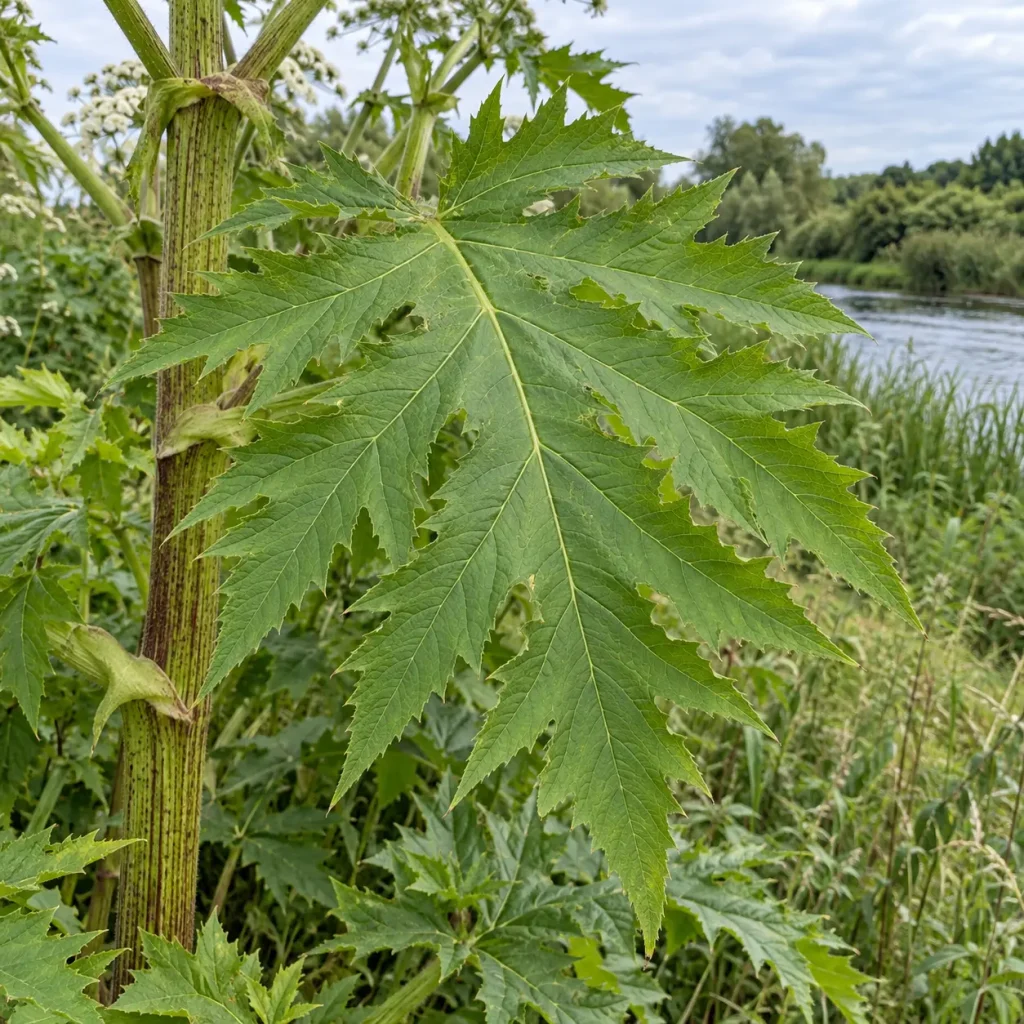
Large, deeply divided green leaves with sharply toothed edges. Young growth forms a low rosette before tall flowering stems develop.
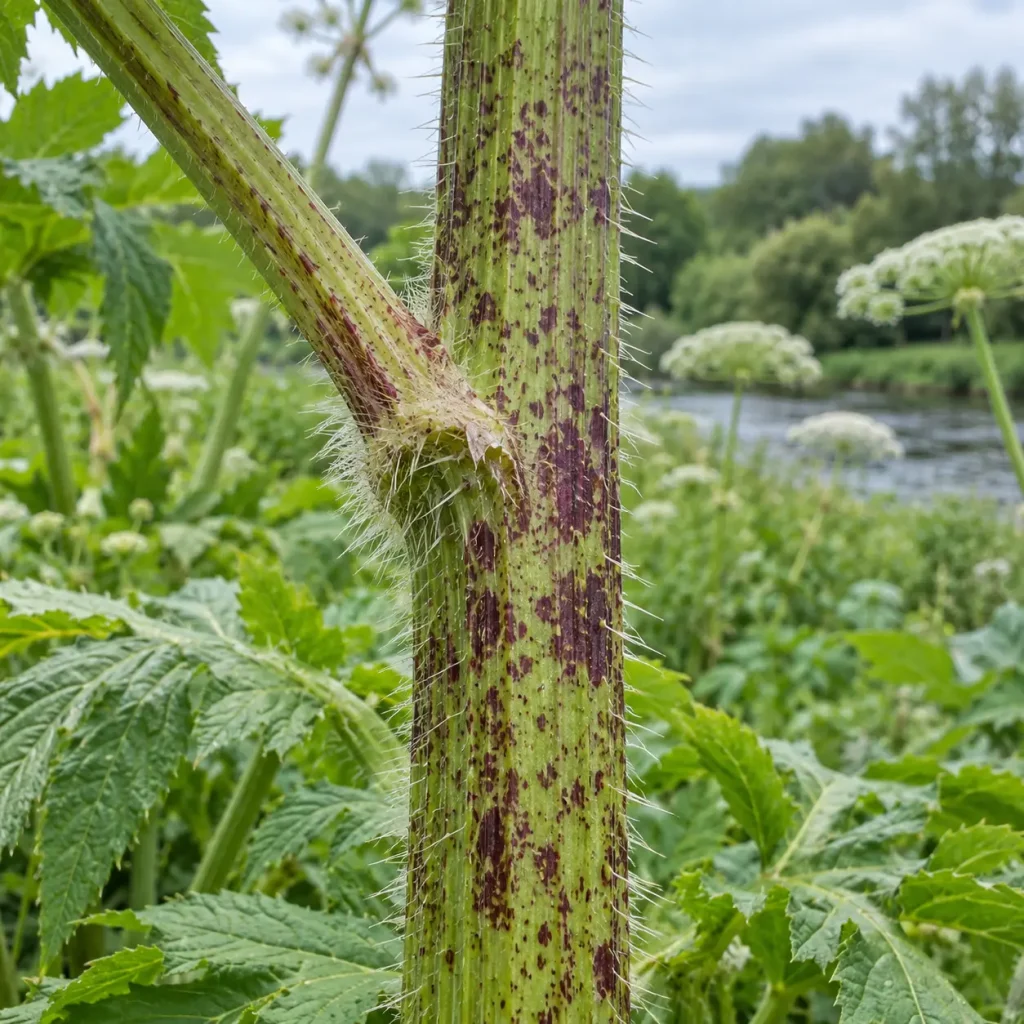
Thick, hollow stems with purple blotches and conspicuous bristles. Do not touch or break a stem to inspect it.
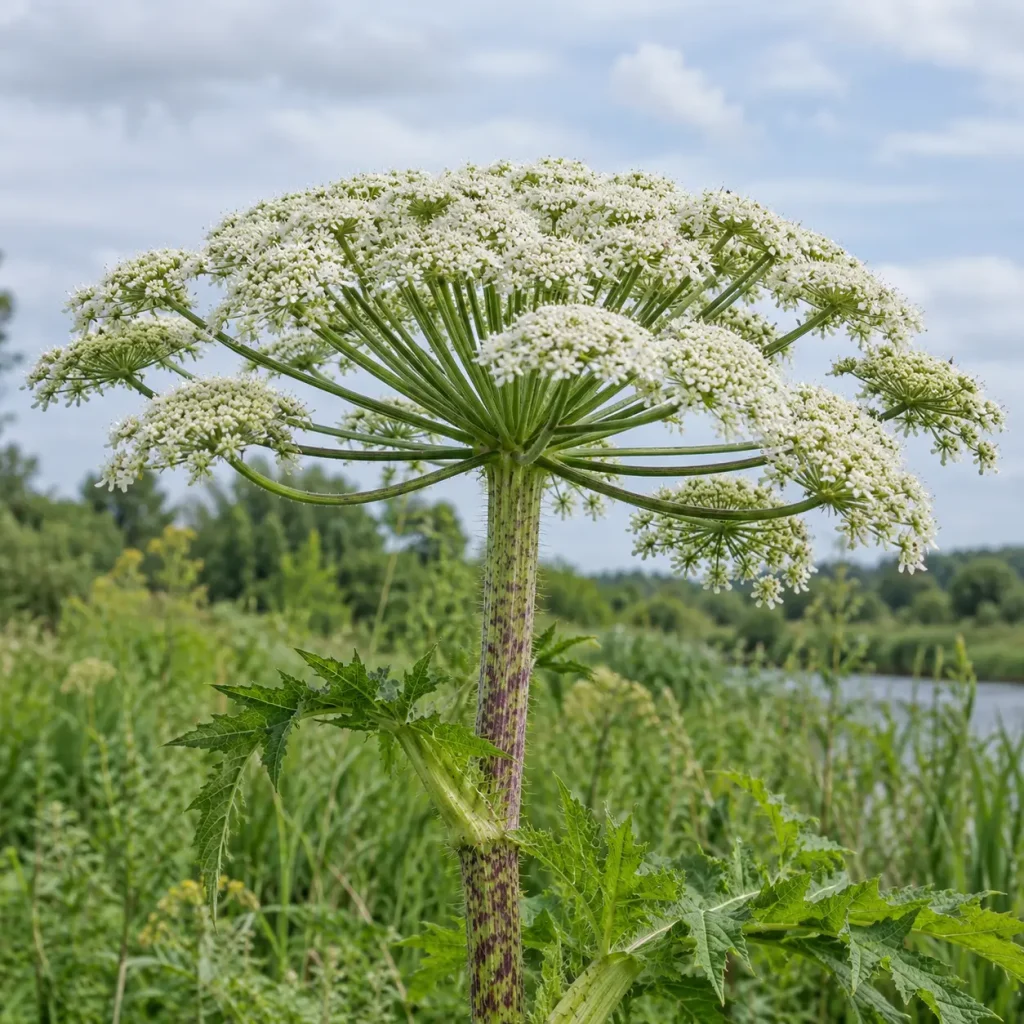
Broad, umbrella-shaped clusters of small white flowers. Non-flowering plants can still present a contact risk.
| Feature | Giant hogweed | Common hogweed |
|---|---|---|
| Size | Can reach around five metres when mature. Young plants are much smaller. | Usually much smaller, reaching around two metres. |
| Leaves | Large, deeply divided leaves with sharply toothed, angular lobes. | Smaller leaves with generally more rounded lobes. |
| Identification | Compare several features together. Height or a single feature alone may not give a conclusive identification. Avoid touching either plant to inspect it. | |
Common hogweed is a native plant, but its sap can also irritate skin. Avoid handling either plant to check which one you have.
Send Photographs Taken From a Safe Distance
If you can do so without approaching or touching the plant, send an overall photograph and images showing the leaves, stems and flowers. Add the site postcode and tell us where the plant is growing. We will advise whether the photographs are sufficient or whether a site visit is needed.
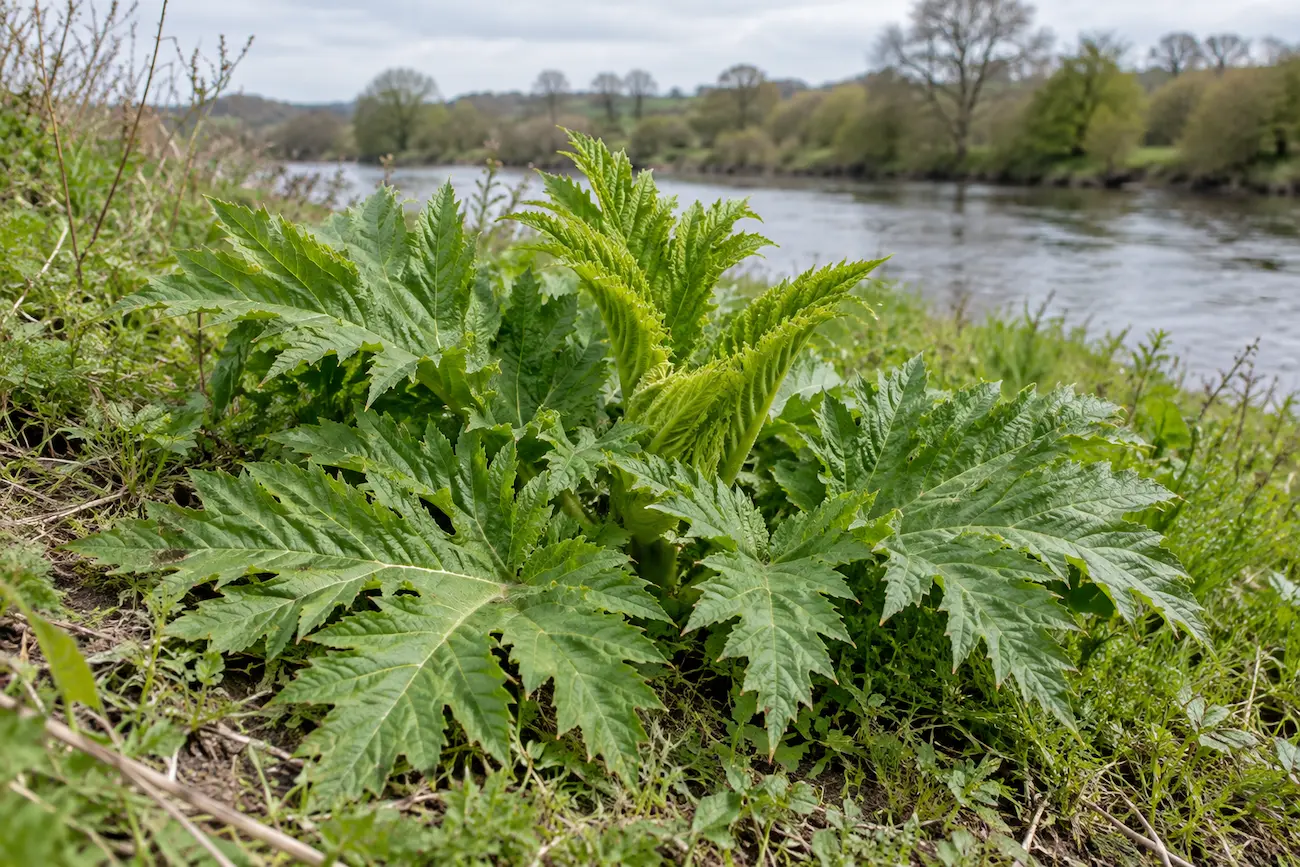
Look for emerging leaf rosettes. Plants may be identifiable before the tall stems and flowers appear.
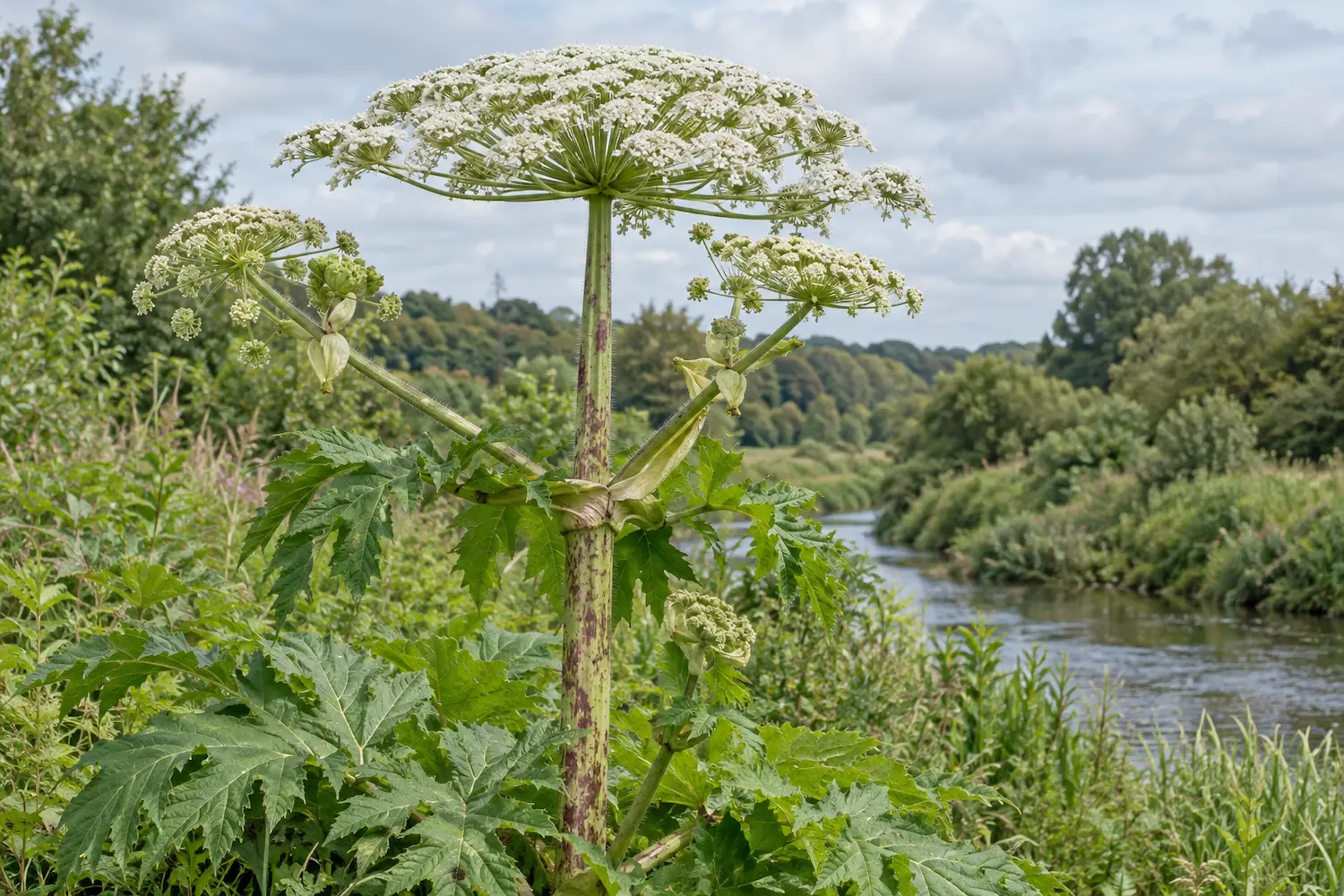
Mature plants develop tall stems and large flower heads. Identification should include the leaves and stems as well as flowers.
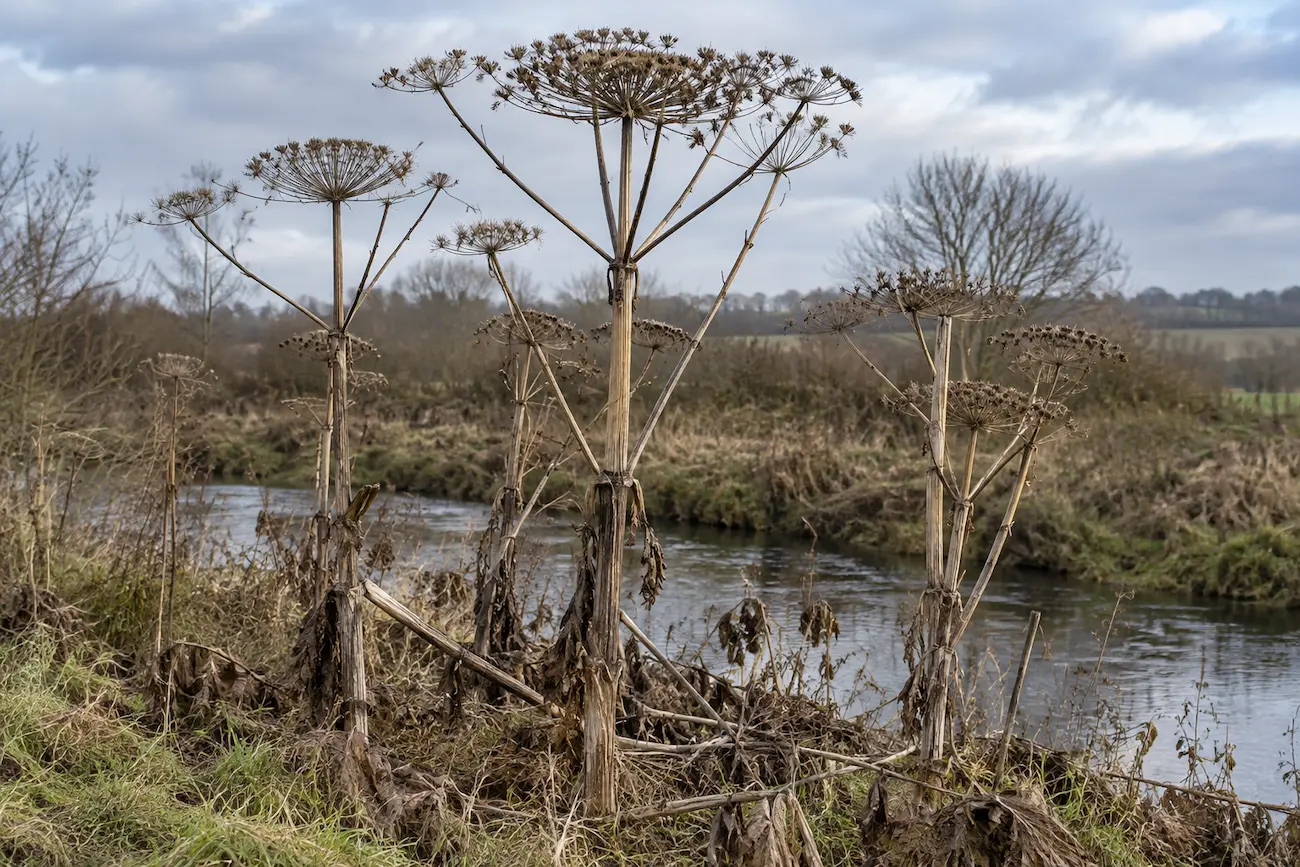
Above-ground growth dies back; dry stems and seed heads may remain. A site history and photographs from the growing season can help inform assessment.
Tell us when the plant was last seen and whether treatment or clearance has already taken place. That context helps us advise on the next step.
Giant hogweed presents a contact hazard where people may encounter it, including gardens, paths, working areas and publicly accessible land. Dense growth can also shade out other vegetation.
The plant spreads by seed. Rivers can carry seeds to new locations, so managing a riverside infestation may require consideration of connected land as well as the visible plants.
A professional survey establishes:
Whether or not giant hogweed is present
Its extent and proximity to people, boundaries, or access routes
The level of exposure risk
Whether immediate control measures are required
Seeds already in the soil can produce new seedlings after established plants have been treated. A control programme therefore needs to address emerging growth and prevent further seed production. Clearing the visible vegetation does not necessarily complete the work.
Giant hogweed is governed by the same legal obligations across residential, commercial, and public-facing sites.
What differs is the consequence: public safety, liability, and speed of response.
A site survey establishes what is growing, where it occurs and how it affects use of the land. We consider access routes, boundaries and the people who may encounter the plants, then recommend proportionate control measures.
We start by understanding where the hogweed has been identified and who may be affected — residents, workers or the public — and whether immediate action is required.
A professional survey confirms presence, extent and risk level, forming the basis for any control or removal strategy.
Removal is a separate service, based on the outcome of the site survey and management report produced.
Where applicable, this includes monitoring, documentation and confirmation of control to support compliance and ongoing site safety.
Japanese Knotweed Expert operates across England and Wales, offering professional surveys, management plans and remediation services for Giant Hogweed – explore the areas we cover here.
The right approach depends on the extent and maturity of the plants, previous seed production, site access and how the land will be used. We assess these factors before recommending a programme.
Instead of risk assumptions, your site management plan details the following:
| What you receive | Why it matters |
|---|---|
| A clear, documented position on presence and extent | Establishes whether hogweed is present and how far it extends, removing uncertainty at an early stage. |
| Confirmation of health and exposure risk | Clarifies the level of risk to residents, workers or the public, supporting proportionate decision-making. |
| Defined control or removal measures | Sets out clear, site-specific actions where intervention is required. |
| Professional documentation to support duty of care | Provides written evidence that appropriate steps have been taken to manage risk responsibly. |
| A clear route to bringing the site back under control | Establishes a practical and defensible path toward compliance and ongoing site safety. |
This allows sites to be managed safely and responsibly, without ongoing exposure or escalation.
Where required, documentation is prepared to a standard that can be relied on by local authorities, managing agents, or health and safety stakeholders.
Our surveys and reports are prepared to support review by:
They typically set out:
The objective is to demonstrate that the risk has been identified and addressed appropriately.
Costs and timeframes depend on site access, extent, and urgency.
Where removal or long-term control is carried out, this is supported by:
This provides assurance that the risk has been addressed responsibly and sustainably.
Japanese Knotweed Expert provides specialist giant hogweed surveys, treatment and removal across England and Wales, including Cheshire, Greater Manchester and Hyde, Merseyside, Lancashire, Derbyshire, Nottinghamshire, Staffordshire, Shropshire, the West Midlands, West Yorkshire, South Yorkshire, and Tyne and Wear. Whether you have found a suspected plant in your garden or need to manage growth across a larger site, send your postcode and photographs for free initial identification, or request a professional survey to establish the extent of the problem and plan the right treatment.
Yes. Giant hogweed sap can cause severe skin burns and long-lasting sensitivity to sunlight if it contacts skin and is exposed to UV. Risk is higher where plants are near paths, play areas, public access, or working zones.
Where giant hogweed is present, appropriate action is expected to prevent harm and reduce the risk of spread. The correct response depends on location, extent, and exposure risk — the obligation is consistent, but the level of control required varies.
Avoid contact, keep people and pets away, and do not cut or strim it. Disturbing the plant can increase exposure risk and spread. The safest next step is professional confirmation so the position can be assessed and the right controls applied.
A professional assessment confirms whether the plant is giant hogweed, maps its extent, and considers proximity to access routes and boundaries. The outcome is a clear position on what’s present and what level of control is required to manage risk appropriately.
Timeframes depend on site access, extent, and the risk profile. Where exposure risk is high, the priority is early control measures to reduce immediate hazard, followed by an appropriate treatment or removal programme aligned with the site’s use.
Control is typically based on targeted herbicide treatment and safe site management to prevent contact and regrowth. The method used depends on the plant’s maturity, the site setting, and proximity to people or sensitive areas. The aim is effective control without unnecessary disruption.
Yes. Giant hogweed spreads primarily by seed and can establish quickly if not managed. Long-term control focuses on preventing seeding, treating regrowth, and applying appropriate monitoring where needed, especially near boundaries and watercourses.
Yes. Where required, documentation can be provided to show what was identified, the extent, the risk considerations, and what actions have been taken or are planned. This supports duty of care, site management, and third-party review where needed.