











If you’ve found Japanese knotweed during a property purchase, it’s completely understandable to feel concerned, especially if your mortgage application is already underway. You may be wondering whether getting a mortgage with Japanese knotweed is even possible, if the lender will refuse the property, whether the sale could fall through, or whether you’re about to face unexpected costs and delays.
The good news is that the situation is often more manageable than it first appears. Mortgage lenders don’t simply look at whether Japanese knotweed is present. They’ll usually consider the level of risk, how close the plant is to buildings or structures, and whether there’s a suitable management plan in place.
Professional surveys, treatment plans, and supporting documentation can help lenders understand the situation properly. In many cases, having clear information early in the process helps remove uncertainty, supports informed decision-making, and prevents avoidable delays later in the transaction.
Rather than relying on assumptions or conflicting advice, obtaining professional guidance allows you to understand the true level of risk and move forward with greater confidence.
Japanese knotweed spreads through an underground rhizome system that can extend well beyond the visible growth above ground. In some situations, unmanaged growth may affect patios, garden walls, drains, pathways, and other vulnerable structures around a property.
While severe structural damage is less common than many headlines suggest, mortgage lenders assessing Japanese knotweed will still want to understand whether the infestation could affect the property’s condition, future mortgage valuation, or marketability over time. Where the extent of the rhizome system is unclear, or growth is located close to buildings, further investigation may be requested before a lending decision is made.
Mortgage lenders are also thinking ahead. If they ever needed to recover the loan by selling the property, they need confidence that it would remain attractive to future buyers and achieve an appropriate mortgage valuation.
This is one reason why buying a house with Japanese knotweed can involve additional scrutiny during the lending process. Properties affected by Japanese knotweed may require a professional Japanese knotweed property survey, alongside evidence of treatment or ongoing management. Where surveys, treatment records, and management plans are already in place, buyers and lenders are often able to assess the situation with far greater confidence.
Japanese knotweed is often viewed more favourably when there is evidence that the issue is being actively managed. A documented Japanese knotweed management plan, supported by professional surveys, treatment records, and, where available, an insurance-backed guarantee, can help demonstrate that appropriate steps are being taken to monitor and control the infestation.
Where knotweed spreads across boundaries or remains unmanaged for extended periods, disputes with neighbouring properties can sometimes arise. Clear documentation helps reduce uncertainty for buyers, mortgage lenders, valuers, and legal professionals involved in the transaction, allowing the situation to be assessed with greater confidence.
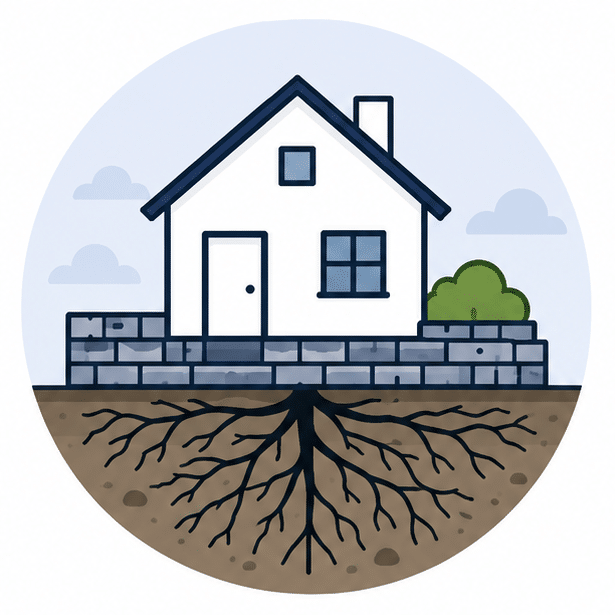
• House foundation • Patio • Drain • Knotweed roots

• Survey report • Clipboard • Mortgage paperwork

• House with valuation tag • Buyers viewing property

• Knotweed treatment plan • Surveyor inspecting site
Mortgage lenders don’t all view Japanese knotweed in the same way. In many cases, the outcome depends on how well the issue has been assessed, documented, and managed.
Properties with clear evidence of professional oversight are often viewed very differently from those where the extent of the infestation remains uncertain.
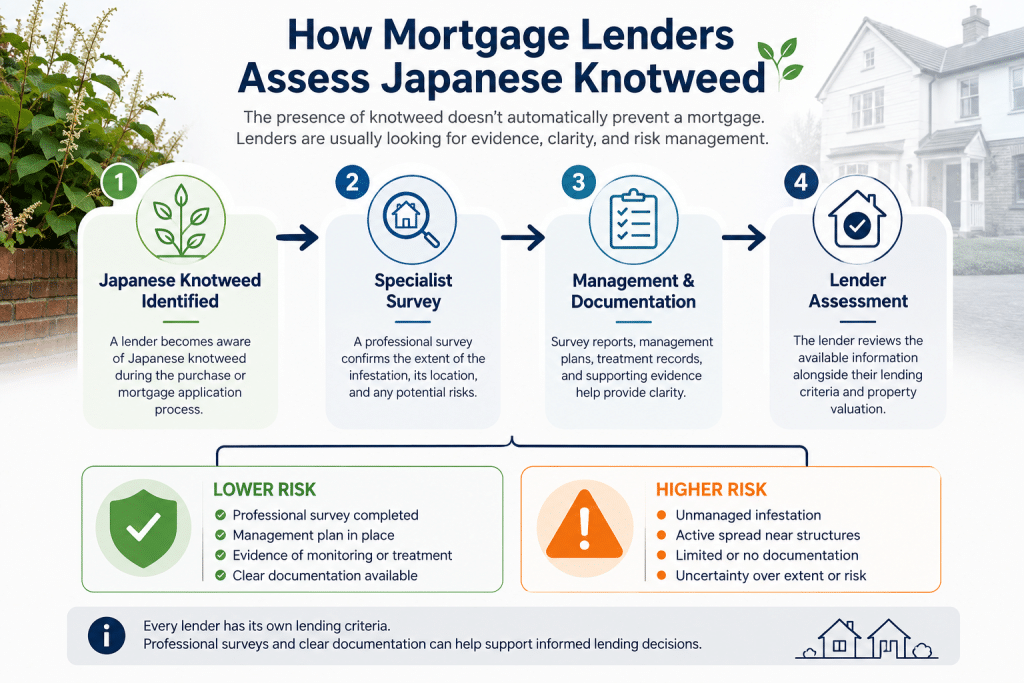
Lenders are ultimately trying to understand whether Japanese knotweed could affect the property’s future value, saleability, or suitability as security for the loan. This is why specialist surveys, management plans, and supporting documentation are often requested during the mortgage process.
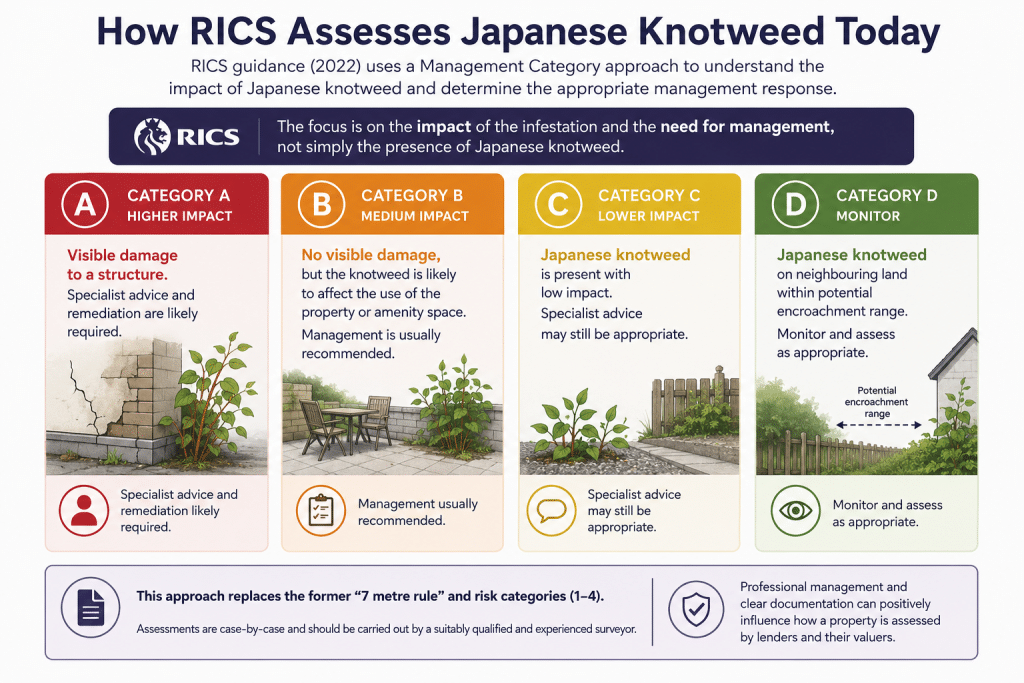
Surveyors and valuers may refer to guidance published by the Royal Institution of Chartered Surveyors (RICS) when assessing Japanese knotweed during property transactions.
Rather than focusing on the presence of the plant alone, RICS guidance considers its potential impact on the property and whether appropriate management is in place. This helps lenders, valuers, and buyers understand the level of risk and whether any further action may be needed.
Where Japanese knotweed has been identified, mortgage lenders will often want to see evidence that the situation has been properly assessed and, where necessary, professionally managed. Surveys, management plans, treatment records, and supporting documentation can all help provide greater clarity during the lending process.
When Japanese knotweed is suspected, one of the most important steps is establishing exactly what is present and how it may affect the property transaction.
Assumptions can create unnecessary delays, concerns, and complications for buyers, sellers, lenders, and surveyors.
A professional identification survey can help confirm the species present and assess factors such as:
• Growth patterns and plant characteristics
• Likely rhizome extent
• Proximity to buildings and boundaries
• Surrounding site conditions
Where knotweed is present, the survey provides clear, documented evidence that can support mortgage applications, property sales, management planning, and informed decision-making throughout the transaction process.
Once Japanese knotweed has been confirmed, one of the next questions for buyers, lenders, and surveyors is how the infestation will be managed moving forward. A management plan provides a clear, structured approach for monitoring, controlling, or treating the issue over time.
Depending on the site and the extent of the infestation, this may include:
• Herbicide treatment programmes
• Excavation and removal
• Ongoing monitoring
• Site-specific risk management measures
A documented management plan provides clear evidence that the situation is being professionally assessed and actively managed, helping reduce uncertainty during mortgage applications and property transactions.
If you’re considering Japanese knotweed treatment, it’s worth checking whether the contractor offers both a company guarantee and a knotweed insurance-backed guarantee. Many property owners also choose contractors associated with recognised industry bodies, such as the Property Care Association (PCA), when arranging treatment and ongoing management.
A company guarantee demonstrates the contractor’s commitment to the treatment programme, while an insurance-backed guarantee provides an additional layer of reassurance and long-term support.
Whether you’re looking to buy or sell a property, documented treatment records, guarantees, and a professional Japanese knotweed survey can help provide clarity during the transaction process. This can be particularly valuable where a Japanese knotweed mortgage application, mortgage valuation with Japanese knotweed, or a Japanese knotweed survey for mortgage is required.
For buyers, lenders, and surveyors, recognised guarantees and supporting documentation help demonstrate that the infestation has been professionally managed and responsibly addressed.
Ultimately, mortgage lenders are often looking for evidence rather than assumptions. Professional surveys, risk assessments, management plans, treatment records, and guarantees can all help provide a clearer picture of the situation, allowing buyers, sellers, surveyors, and lenders to make informed decisions with greater confidence.
Getting a mortgage with Japanese knotweed is often possible when the level of risk is clearly understood and appropriate management measures are in place. Whether you’re looking to buy or sell, obtaining professional advice early can help reduce uncertainty, address potential valuation concerns, and keep your property transaction moving forward.
If you’re concerned about getting a mortgage with Japanese knotweed, obtaining professional advice early can help remove uncertainty and ensure decisions are based on evidence rather than assumptions.
In many cases, yes. Japanese knotweed does not automatically prevent a mortgage application from being approved, and many lenders will consider affected properties where the level of risk is understood and appropriate management measures are in place.
Mortgage lenders typically assess factors such as the location of the infestation, its proximity to buildings, whether professional surveys have been completed, and whether there is evidence of ongoing management or treatment. Some lenders may request additional documentation before making a decision.
The presence of Japanese knotweed is often less important than the quality of the information available to support the application. Professional surveys and clear documentation can help lenders assess the situation with greater confidence.
A mortgage valuation may identify visible signs of Japanese knotweed, although it is not designed to be a specialist invasive plant survey. The primary purpose of a valuation is to assess the property’s suitability as security for the loan.
If a valuer identifies, or suspects, Japanese knotweed, they may recommend further investigation. In these situations, a specialist Japanese knotweed survey can help confirm the extent of the infestation and provide additional information for lenders, buyers, and surveyors.
Obtaining professional advice early can help reduce uncertainty and prevent avoidable delays during the mortgage process.
Not always. However, if Japanese knotweed is suspected or has already been identified, a lender, surveyor, or valuer may request a specialist survey to better understand the level of risk and any management measures in place.
A Japanese knotweed survey can confirm whether the plant is present, assess its extent, identify potential risks, and provide recommendations where appropriate. In some cases, a survey may also confirm that the plant is not Japanese knotweed at all, helping remove unnecessary concern.
For buyers, sellers, and lenders, a professional survey provides documented evidence that supports informed decision-making throughout the property transaction.
Many mortgage lenders will consider properties affected by Japanese knotweed, although their individual lending criteria can vary. Some lenders may take a more cautious approach than others, particularly where there is limited information about the extent of the infestation or no evidence of professional management.
Lenders are generally looking to understand the level of risk rather than simply whether knotweed is present. Professional surveys, management plans, treatment records, and supporting documentation can help provide the clarity needed to make an informed lending decision.
Where appropriate management measures are already in place, affected properties are often viewed more favourably than sites where the infestation remains unmanaged or poorly documented.
Japanese knotweed can affect a property’s value, marketability, and mortgageability in some circumstances. The extent of any impact will depend on factors such as the size of the infestation, its location, whether there is evidence of damage, and how the issue is being managed.
Properties with unmanaged infestations may attract greater scrutiny from buyers and lenders. By contrast, properties supported by professional surveys, treatment records, management plans, and recognised guarantees are often easier to assess and may be viewed more favourably.
Each property should be considered on its own merits, which is why professional surveys and risk assessments are often recommended.
Not necessarily. While Japanese knotweed can introduce additional considerations during a property purchase, many affected properties are bought, sold, and mortgaged successfully every year.
The key factors are usually the level of risk, the availability of professional documentation, and whether appropriate management measures are already in place. Buyers often feel more confident where specialist surveys, treatment records, management plans, and guarantees are available.
Rather than making assumptions based on the presence of the plant alone, obtaining professional advice can help ensure decisions are based on evidence and a clear understanding of the situation.
In many cases, yes. Japanese knotweed does not automatically prevent a property from being insured, although insurers may take the infestation into account when assessing risk.
Requirements can vary between providers, and insurers may consider factors such as the location of the infestation, whether treatment has taken place, and whether professional management measures are in place. Documented treatment records and recognised guarantees can sometimes help provide additional reassurance.
If Japanese knotweed is present or has previously been treated, it is generally advisable to provide accurate information to your insurer and seek guidance where required.
An insurance-backed guarantee provides an additional layer of reassurance alongside a contractor’s own guarantee. These guarantees are designed to support the long-term validity of the treatment programme and provide confidence that documented commitments remain supported throughout the guarantee period.
For property owners, buyers, lenders, and surveyors, recognised guarantees can help demonstrate that Japanese knotweed has been professionally treated and responsibly managed. They are often viewed as a positive indicator during property transactions.
If you’re considering treatment, it is generally advisable to check whether both a company guarantee and an insurance-backed guarantee are available before work begins.
The Royal Institution of Chartered Surveyors (RICS) uses Management Categories A–D to help surveyors assess the potential impact of Japanese knotweed on a property. The focus is not simply on whether knotweed is present, but on how it may affect the property and what level of management may be required.
The assessment considers factors such as property condition, evidence of damage, the extent of the infestation, and whether professional management measures are already in place. This provides a more practical and evidence-based approach than relying on the presence of the plant alone.
The categories help lenders, valuers, buyers, and surveyors understand the level of risk and determine whether further investigation or management may be appropriate.
If Japanese knotweed is identified during a property purchase, the first step is usually to obtain professional advice. A specialist survey can help confirm the extent of the infestation, assess potential risks, and provide recommendations tailored to the site.
In many cases, buyers, sellers, lenders, and surveyors simply need reliable information before decisions can be made with confidence. Professional surveys, management plans, treatment records, and guarantees can all help provide that clarity.
Acting early often helps reduce uncertainty, avoid unnecessary delays, and keep the transaction moving forward while ensuring all parties have a clear understanding of the situation.