
Weeds in your garden can be a pain at the best of times… invasive weeds are even worse! Here is a list of the top invasive weeds in the UK and what to look out for:

As most people are aware, Japanese knotweed is an extremely invasive weed that has been proven to be difficult to remove/kill. If the tiniest trace of the rhizome is left in the soil, a completely new plant can be produced.
As Japanese knotweed can break through concrete, tarmac and drains it is vitally important that it is dealt with by a professional company in an effective manner and one that provides a ten-year insurance backed guarantee along with £5 million pounds professional indemnity insurance on each individual job.
Japanese knotweed can grow up to 10 cm per day during the growing season. If you find Japanese Knotweed it is best to be left to be removed by the experts!
As well as being an invasive species of plant, the sap that Giant hogweed produces can actually cause severe burns and blisters when coming into contact with human and animal skin. Please do be careful if you have either young children or dogs and you see this plant as it has killed a young woman before.
Giant hogweed spreads via its seeds – one plant can produce up to 50,000 seeds with a 90% germination rate. This plant is a significant health and safety risk and as such it should be dealt with by professionals.


Even though this weed produces pretty pink flowers, do not be deceived! This plant is highly invasive.
Himalayan Balsam can produce up to 800 seeds per year, with each seed being able to survive for 2 years – even in shaded areas. This species also tends to shade out other vegetation meaning that, eventually, all surrounding plants may die out. This can have a significant impact on soil erosion especially around streams and rivers.
This shrub can be identified by its leathery, dark-green, oval leaves, clusters of pink funnel-shaped flowers and tall height.
Rhododendron Ponticum kills surrounding plants by absorbing and blocking out all of the sunlight. In addition to this, the leaves are incredibly toxic to animals!
Eradication can take place by excavation or cutting down to ground level and drilling and inserting slow release herbicide pellets.

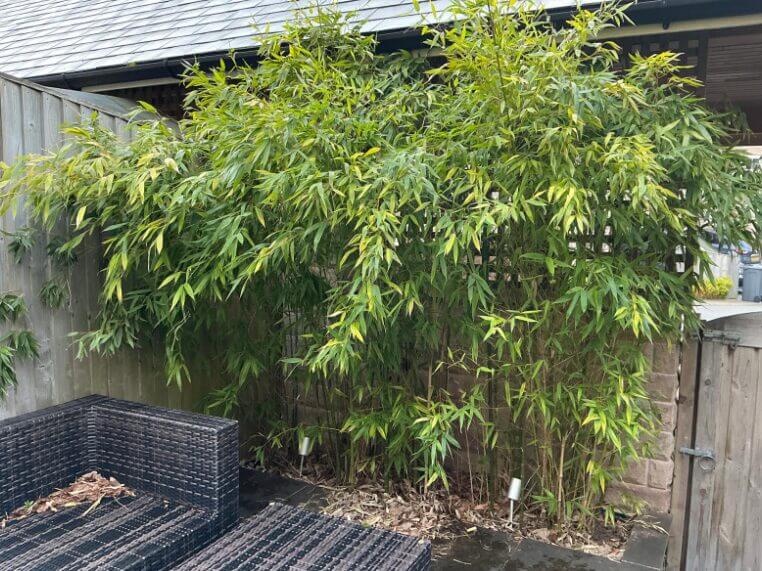
With hundreds of varieties, some varieties are significantly more invasive than others; outcompeting native plants for light and nutrients.Additionally, the running bamboo can easily invade neighbouring gardens and reduce the use of lawn areas as it can pop up everywhere.
If it invades neighbouring properties a civil lawsuit can be raised against you specifically for encroachment and reduced enjoyment of the use of your property.
Broadleaf Dock (Rumex obtusifolius) is a common perennial weed found throughout the UK. It is native rather than a non-native invasive species, but it can become troublesome in gardens, grassland, construction sites and other areas where dense growth is unwanted.
Broadleaf dock spreads mainly through seed, with mature plants capable of producing large quantities that can be dispersed by wind, water, animals and human activity. It also develops a deep taproot, allowing established plants to regenerate if the root is not removed thoroughly.
The plant is recognisable by its large, elongated leaves, often with a wavy edge, and tall flowering stems that develop rusty-brown seedheads.
Regular removal before plants set seed can help limit spread, while established infestations may require digging or targeted professional treatment.
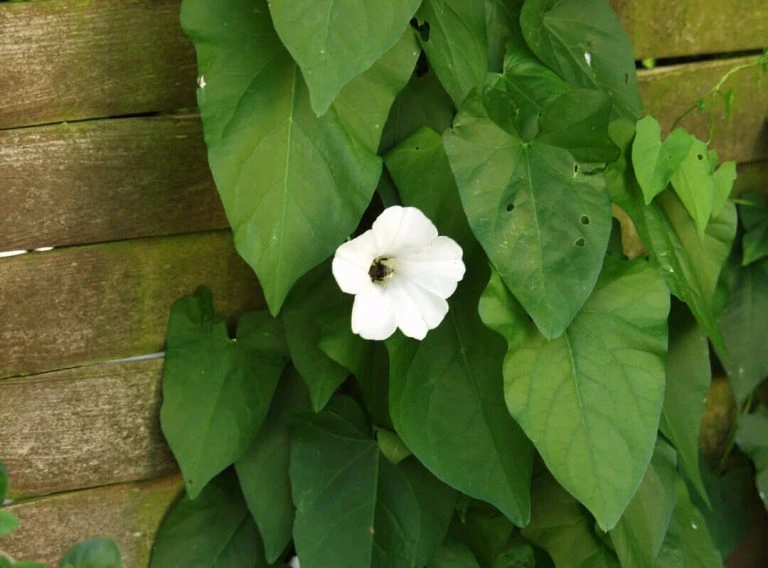
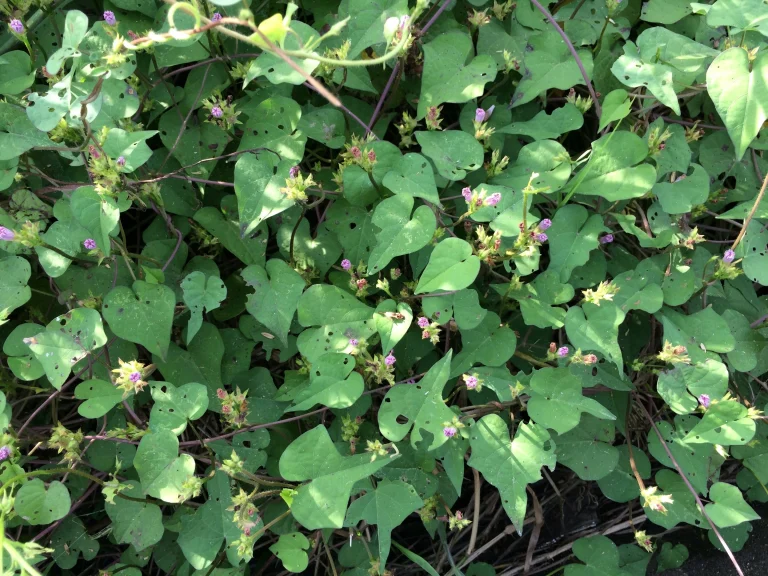
Field bindweed (Convolvulus arvensis) is a fast-growing perennial weed that can quickly spread through gardens, borders, grassland and other areas. Its climbing stems can wind around surrounding plants, fences and structures, allowing it to form dense growth and compete with other vegetation.
Bindweed is easily recognised by its slender stems, arrowhead or triangular-shaped leaves and distinctive trumpet-shaped flowers, which commonly appear during the summer.
One of the main challenges when controlling bindweed is its extensive perennial root system. The roots are brittle and can regenerate from small fragments left in the soil, meaning simply pulling or cutting the visible growth may not provide lasting control.
Small infestations can be managed by repeatedly removing growth and carefully excavating roots. Larger or persistent infestations may require a targeted treatment programme.
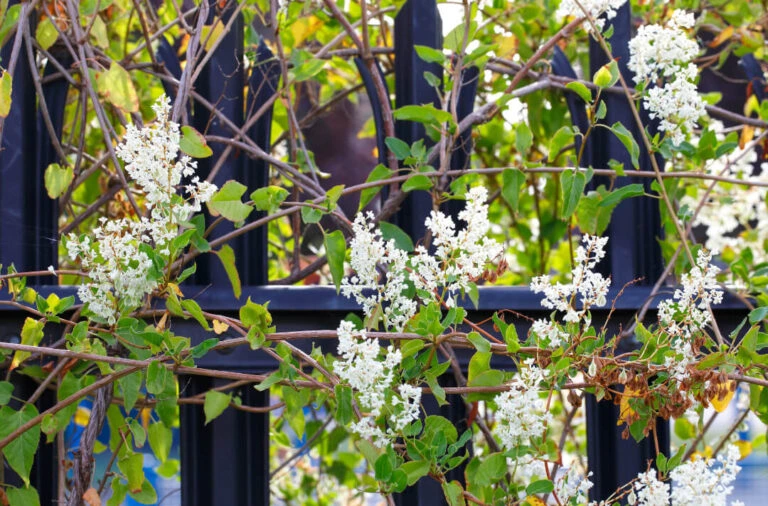
Russian vine (Fallopia baldschuanica) is a vigorous, non-native climbing plant that can rapidly overwhelm surrounding vegetation. It is closely related to Japanese knotweed and can sometimes be mistaken for it, but the two plants have very different growth habits.
Russian vine produces long, twining stems that climb through other plants, fences and structures. It has pointed, triangular leaves and produces clusters of small white flowers, particularly during late summer and early autumn.
Its rapid growth allows it to cover large areas and compete with other vegetation for light and space. Once established, it can be difficult to control because cutting back the visible growth does not necessarily prevent regrowth.
Early identification and management can help prevent Russian vine from becoming established across larger areas. Where growth is extensive or persistent, professional assessment can help determine the most appropriate control approach.
Bohemian knotweed (Fallopia × bohemica) is a hybrid of Japanese knotweed and giant knotweed and is one of the invasive knotweed species found in the UK. Like its parent species, it can form dense stands and spread through underground rhizomes, making established infestations difficult to control.
The plant can be challenging to identify because it shares characteristics with both Japanese and giant knotweed. Its leaves are generally larger than those of Japanese knotweed but smaller than those of giant knotweed, while its stems have a bamboo-like appearance and it produces clusters of pale flowers.
Bohemian knotweed should be treated carefully because cutting, digging or moving contaminated plant material can increase the risk of spread. GOV.UK identifies Bohemian knotweed as one of the four invasive knotweed species in the UK.
If you suspect Bohemian knotweed, professional identification and a tailored management plan can help prevent further spread.
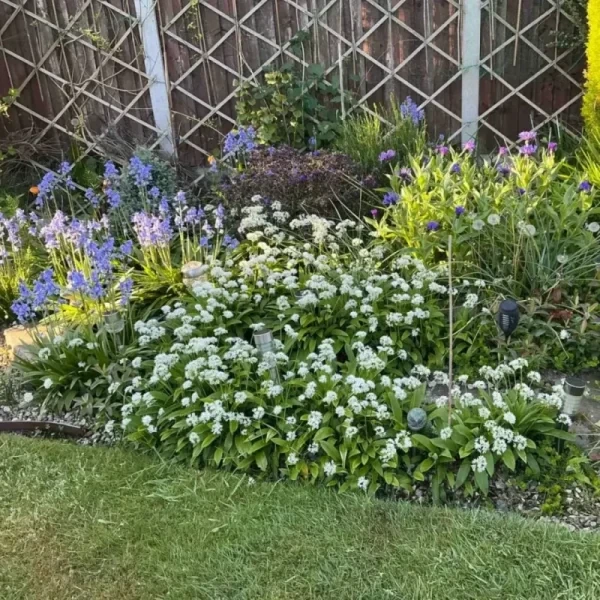
Three-cornered garlic (Allium triquetrum) is a non-native bulbous plant that can become invasive, particularly in milder parts of the UK. It is commonly found in gardens, verges, woodland edges and other areas where it can establish and spread.
The plant is relatively easy to recognise when in flower. It produces narrow green leaves and distinctive drooping white, bell-shaped flowers, often marked with a green stripe. Crushing the leaves can also release a strong garlic-like smell.
Three-cornered garlic spreads through both seeds and underground bulbs. Once established, it can form dense patches that compete with surrounding vegetation and make control increasingly difficult.
Simply cutting back the visible foliage may not provide long-term control because bulbs remain underground. Early intervention and careful removal are important, particularly where the plant is spreading into neighbouring areas or natural habitats.
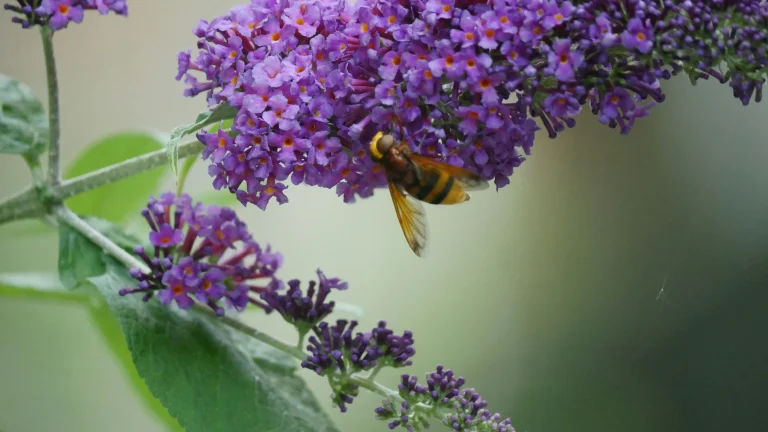
Buddleia (Buddleja davidii), often known as butterfly bush, is a non-native plant that has become widespread across the UK. Although its flowers can provide a valuable nectar source for insects, its vigorous growth can make it problematic where it establishes outside managed planting areas.
Buddleia can grow in poor and disturbed conditions and is commonly found on railway lines, walls, derelict buildings, riverbanks and other areas where little else can establish. Its numerous seeds can be dispersed by wind, allowing new plants to appear some distance from the original source.
Established plants can also develop substantial root systems, particularly when growing in cracks or gaps in walls and other structures. Removing only the visible growth can therefore result in regrowth.
Where buddleia is growing in an unsuitable location or becoming established across a wider area, early identification and appropriate professional management can help prevent further spread.
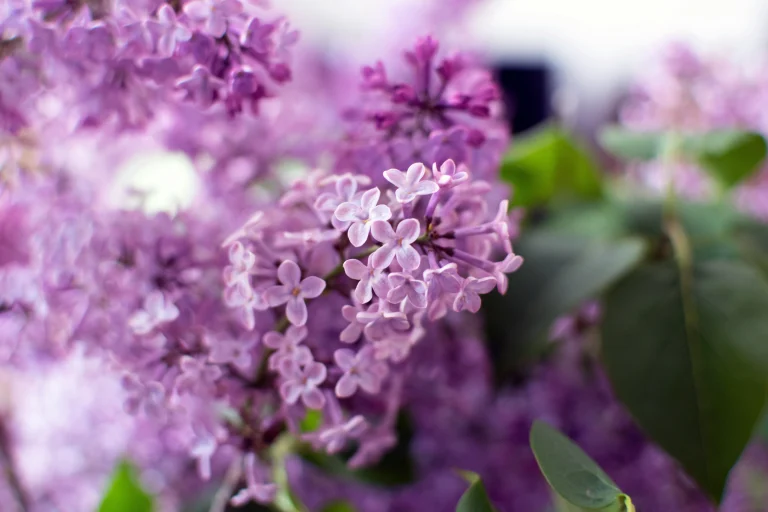
Lilac (Syringa species) is a popular ornamental shrub known for its attractive, highly scented flowers. Although lilac is not generally classified as an invasive species in the UK, some varieties can become troublesome when they spread beyond their intended planting area.
Certain lilacs can produce suckers from the base or surrounding root system, creating new shoots away from the main plant. If left unmanaged, these shoots can gradually form dense growth and compete with nearby plants for space, light and nutrients.
Lilac is usually recognised by its woody stems, heart-shaped leaves and clusters of fragrant flowers, which typically appear in spring. It is an introduced plant in the UK and has become naturalised in some areas, where it can occasionally be found outside gardens.
Where unwanted lilac growth has become established, simply cutting the plant back may encourage further shoots. Careful removal and ongoing management can help prevent regrowth and further spread.
Scared that you have the number one invasive plant on this list? Don’t panic, get it touch with us today!