


Yes — once bamboo is spreading beyond its original footprint, it requires intervention.
Once bamboo is spreading beyond its original footprint, action is required.
The decision is how quickly and how thoroughly it needs to be addressed to prevent further spread and cost.
That process begins by establishing a clear, defensible position on what’s present, how far it has spread, and what level of response is required to bring it back under control.
With bamboo, professional identification is about control — not curiosity.
A professional assessment establishes:
The species present and its growth characteristics are identified to understand behaviour, spread potential and appropriate management options.
Consideration is given to the likely extent of rhizome spread beneath the surface, not just visible above-ground growth.
Distance to buildings, boundaries and neighbouring land is assessed, as these factors influence risk and decision-making.
The potential for further spread, damage or encroachment is evaluated to inform proportionate and defensible next steps.
Until this position is established, bamboo spread is often underestimated — allowing damage and disputes to develop quietly over time.
Bamboo issues follow a consistent process across residential and commercial sites.
Establishing a formal position allows the correct response to be applied early — before spread increases, disruption escalates, or responsibility becomes contested.
What differs is the consequence: cost, disruption, and responsibility — not the process itself.
We begin by understanding how and where the bamboo is spreading, whether neighbouring land is affected, and the most appropriate type of removal required.
A survey confirms the extent of bamboo spread, including below ground rhizomes, and sets out the most effective route to removal within a site specific management plan.
Once the survey has been completed and a management plan issued, action is required to address the bamboo identified. Removal works are carried out in line with the plan, taking account of site access, extent and future land use.
Following removal works, we provide an appropriate guarantee in line with the method used. While regrowth is unlikely, should it occur we ask for photographic confirmation and will return to treat the affected area.
Once bamboo has been assessed, uncertainty is replaced with control.
Instead of guessing how far it has spread or whether it will return, you have:
| What this gives you | Why this matters |
|---|---|
| Clear confirmation of extent and risk | Establishes how far the bamboo has spread and the level of risk it presents to structures, boundaries and neighbouring land. |
| Defined removal or containment strategy | Sets out proportionate, site-specific actions to control or remove bamboo effectively. |
| Reduced risk of further damage or dispute | Helps prevent continued spread that could affect buildings, hard surfaces or services. |
| Documented position for neighbours or professionals | Provides a clear, professional basis for resolving concerns or disputes with adjoining owners. |
| A clear route to resolving the issue properly | Establishes a practical path toward sustained management and long-term resolution. |
This moves the situation from reactive to resolved.
Yes. Where bamboo affects boundaries, property condition, or responsibility, clarity matters.
Our surveys and reports are prepared to support:
Documentation typically sets out:
Bamboo issues rarely escalate suddenly — they compound over time.
The most common risks are:
These risks come from delay, not from the bamboo itself.
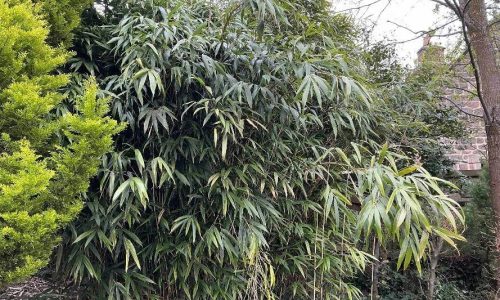
Costs depend on extent and access, but the objective is predictability — not ongoing uncertainty.
Where bamboo excavation is carried out, this is supported by:
This provides long-term reassurance that the issue has been addressed properly.
While bamboo is often planted intentionally, many species spread aggressively below ground. Once uncontrolled, it behaves invasively and can cause significant property and boundary issues.
Yes. Bamboo rhizomes can spread beneath patios, paths, and fences, causing lifting, cracking, or displacement over time.
Yes. Bamboo commonly spreads underground beyond boundaries, which is a frequent cause of neighbour disputes.
Surface cutting rarely solves the problem. Without addressing the below-ground rhizome system, regrowth is likely and spread can continue unseen.
A survey confirms species, extent of spread (including below ground), proximity to structures and boundaries, and the most appropriate control or removal strategy.
Effective control focuses on removing or isolating the rhizome system. Follow-up monitoring may be required depending on extent and site conditions.
Yes. Where bamboo is spreading or unmanaged, it may raise concerns during surveys or buyer enquiries. Clear documentation helps prevent uncertainty.
Yes. Where required, documentation can be provided confirming what was identified, what action was taken, and the outcome.
If bamboo is spreading on your property or towards neighbouring land, the next step is to confirm the extent and apply the correct response — before spread and cost increase further.
Speak to a specialist to discuss your situation and understand what action is appropriate.