
It often begins with a second glance — a cluster of unfamiliar shoots near a fence line, tall hollow stems emerging behind a shed, or broad shield-shaped leaves appearing where nothing was intentionally planted.
At that point, most homeowners ask the same question: “Is this Japanese knotweed?”
The concern is understandable. Japanese knotweed is widely associated with property sales, mortgage valuations and neighbour disputes. Once you are aware of it, even ordinary garden growth can suddenly feel significant.
Below, we break down those characteristics in detail so you can evaluate what you are seeing with clarity before scheduling a site survey.
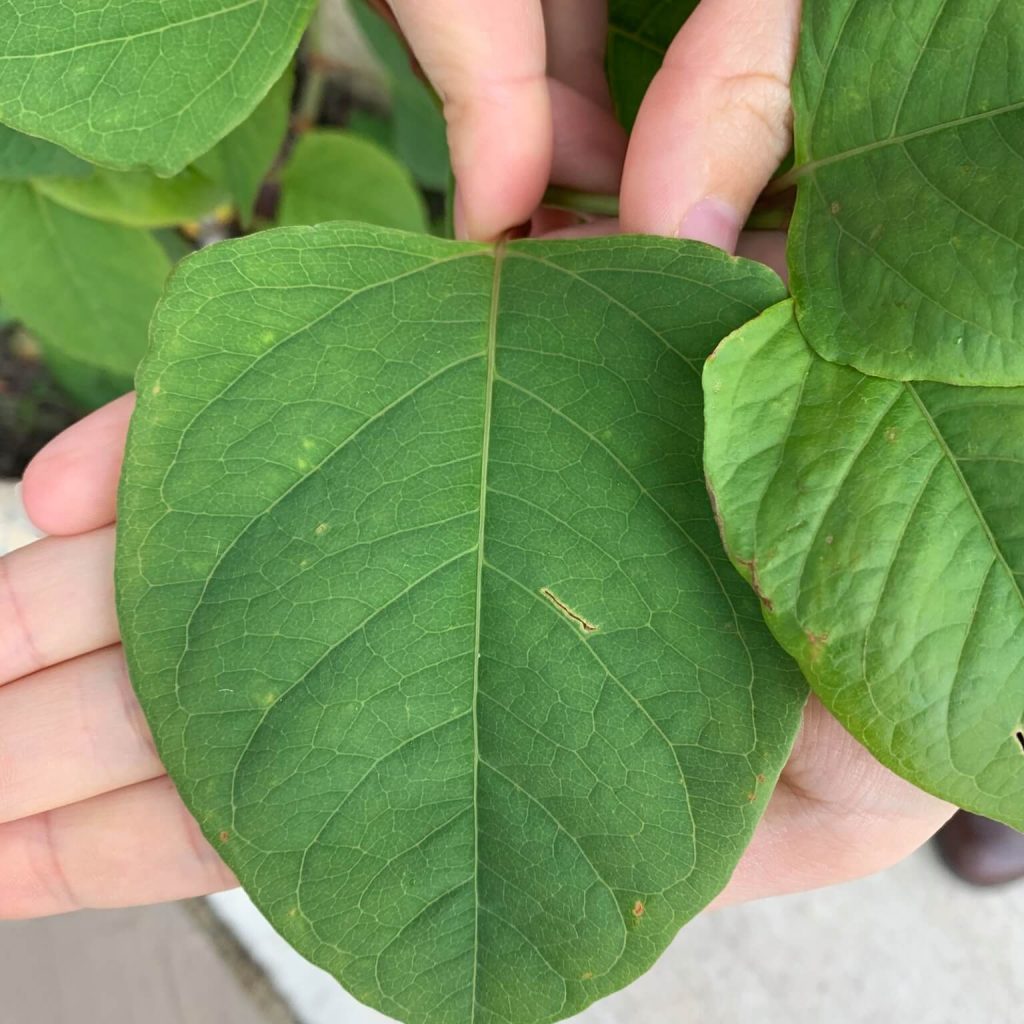
Broad leaves with a flat base and pointed tip.
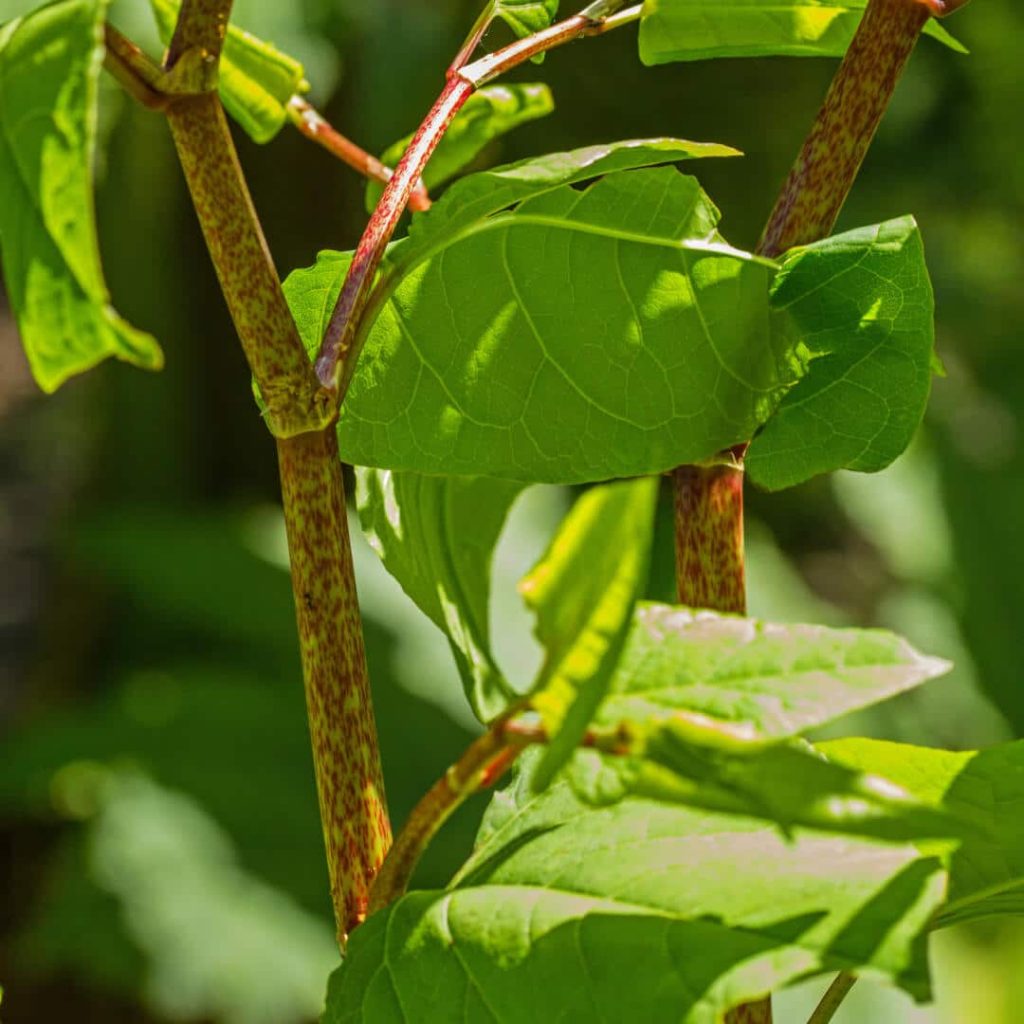
Green stems with purple speckling.
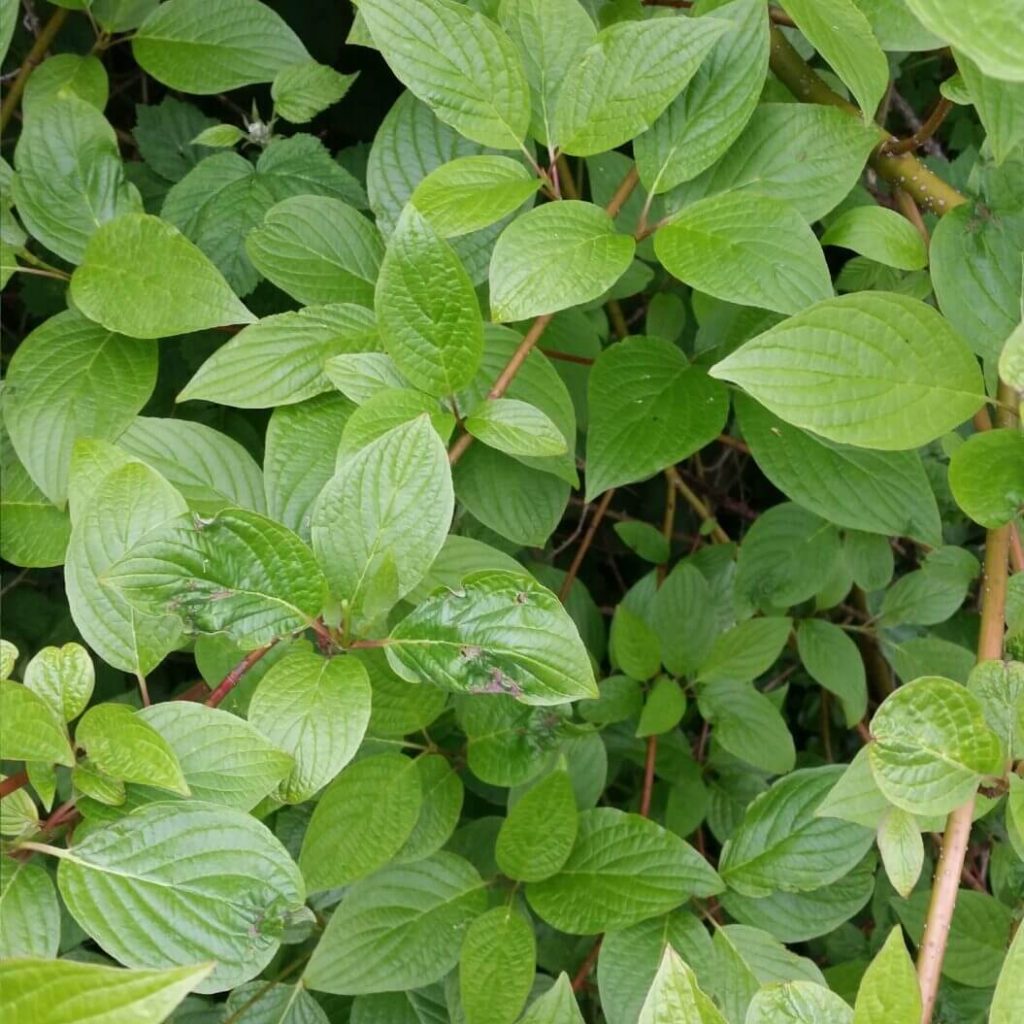
Multiple stems emerging together.
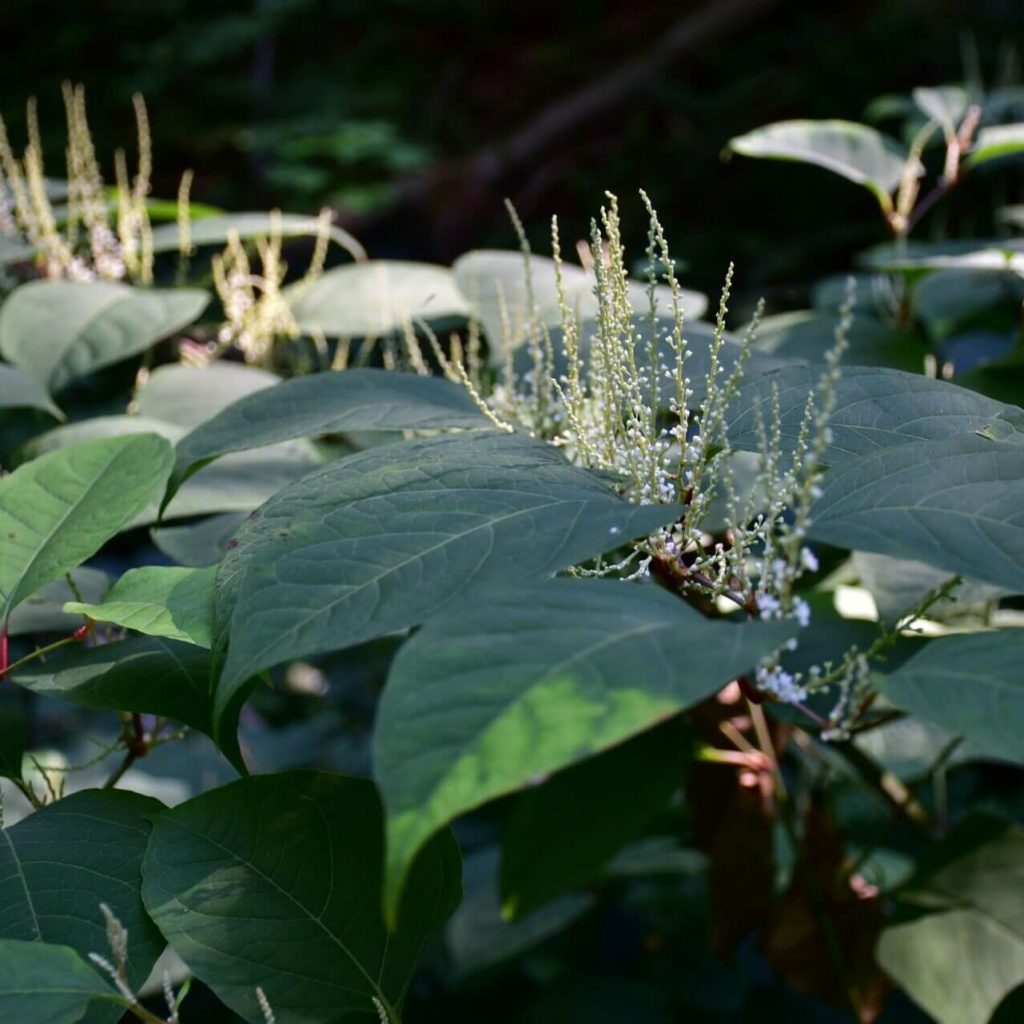
Appear late summer.
Japanese knotweed often appears along garden boundaries, neglected corners of land, or areas where soil has previously been disturbed.
Young spring shoots look very different from mature summer stems. By winter, only dry canes may remain above ground. Patterns of growth and regeneration often reveal more than appearance alone.
For that reason, identification should never rely on a single feature. Instead, it requires assessing a combination of defining characteristics — leaf shape, stem structure, growth habit and seasonal behaviour considered together.
Our surveyors examine these factors collectively, and produce a legally standing document as part of the site survey.

Japanese knotweed usually begins emerging in early spring, typically between March and April. For many homeowners wondering what Japanese knotweed looks like in spring, the first sign is the appearance of dark red or purple spear-like shoots pushing up through the soil.
As the shoots develop, tightly folded leaves begin to unfurl. Early growth can sometimes resemble asparagus or bamboo shoots before the leaves fully open.
Spring identification checklist:
• dark red or purple shoots
• tightly clustered stems
• leaves beginning to unfurl with a reddish tint
By early summer, Japanese knotweed develops into tall upright stems that can reach two to three metres in height. When people search for Japanese knotweed pictures or try to identify the Japanese knotweed plant, this is usually the stage they recognise.
The leaves become broad and heart-shaped, arranged alternately along the stems in a distinctive zig-zag pattern. In late summer, clusters of small creamy-white flowers appear, forming delicate sprays across the foliage.
Summer identification checklist:
• tall hollow stems with purple speckling
• broad shield-shaped leaves
• sprays of small white flowers


As temperatures begin to fall, the plant starts to die back. For those asking what Japanese knotweed looks like in autumn, the most noticeable change is the fading foliage.
The leaves gradually turn yellow before dropping from the stems. Although the foliage disappears, the tall stems often remain standing and begin to dry out.
Autumn identification checklist:
• yellowing leaves
• dying flowers
• stiff, drying stems
During winter the plant becomes dormant, but the previous season’s growth often remains visible. If you are trying to identify Japanese knotweed in winter, look for the dry hollow canes left behind after the leaves have dropped.
These stems appear woody and bamboo-like and may persist in the same location for more than a year. Older stands can develop dense clusters of these brittle canes.
Winter identification checklist:
• hollow brown canes
• brittle stems
• dense stands of dry growth

When several of the following characteristics appear together, the plant in question is more likely to be Japanese knotweed rather than a similar ornamental shrub or garden weed.
If there is any uncertainty, a professional Japanese knotweed survey is usually recommended. Disturbing or attempting to remove the plant before proper identification can spread fragments of the underground rhizome system and make the situation harder to manage.
Japanese knotweed is frequently misidentified, particularly during early spring when new shoots are emerging. Several plants commonly mistaken for Japanese Knotweed share certain visual characteristics, such as broad leaves, upright stems or rapid seasonal growth.
However, these similarities are usually superficial. When examined more closely, the underlying growth pattern, stem structure and leaf formation often differ significantly across these Japanese knotweed lookalikes.
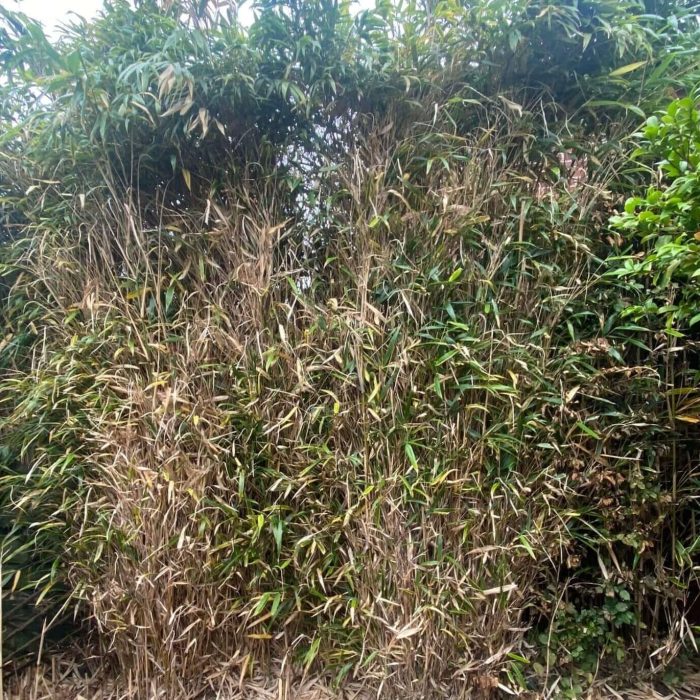
Bamboo is often mistaken for Japanese knotweed because both plants produce tall, hollow stems and can grow quickly during the summer months.
Key difference:
Bamboo forms clumps with narrow leaves, whereas knotweed produces shield-shaped leaves arranged along zig-zag stems.
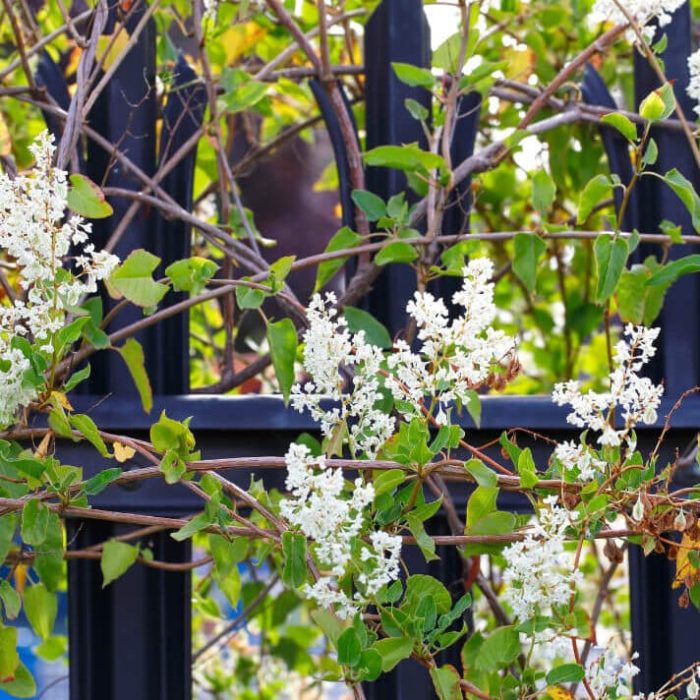
Russian vine is a vigorous climbing plant related to knotweed, and its broad leaves can sometimes resemble young knotweed growth.
Key difference:
Russian vine climbs and spreads over structures, while Japanese knotweed grows upright in dense clusters of stems.
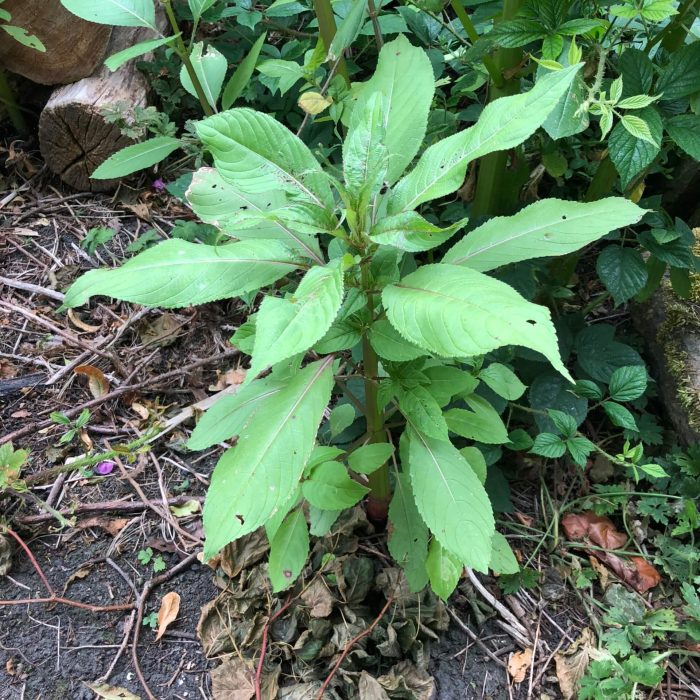
Himalayan balsam grows rapidly and has hollow stems, which can lead to confusion with knotweed during early growth stages.
Key difference:
Himalayan balsam has serrated leaves and distinctive pink helmet-shaped flowers rather than knotweed’s small white flower clusters.
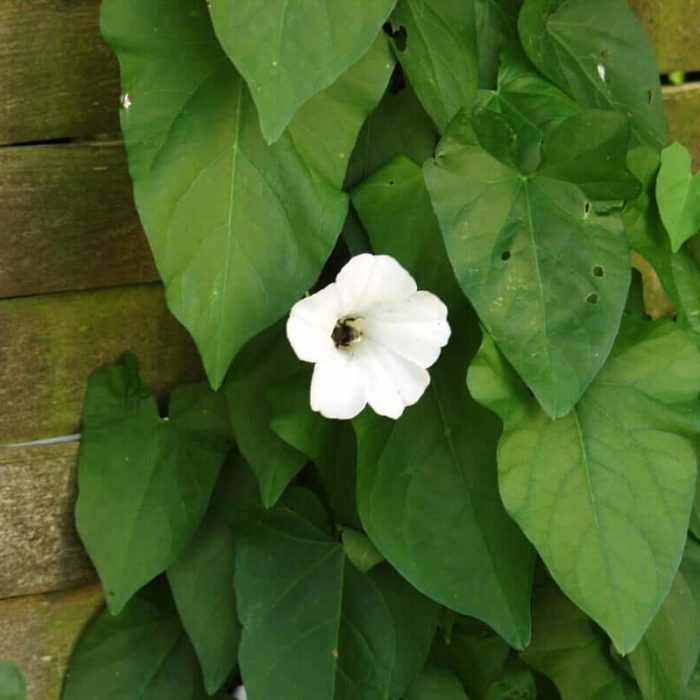
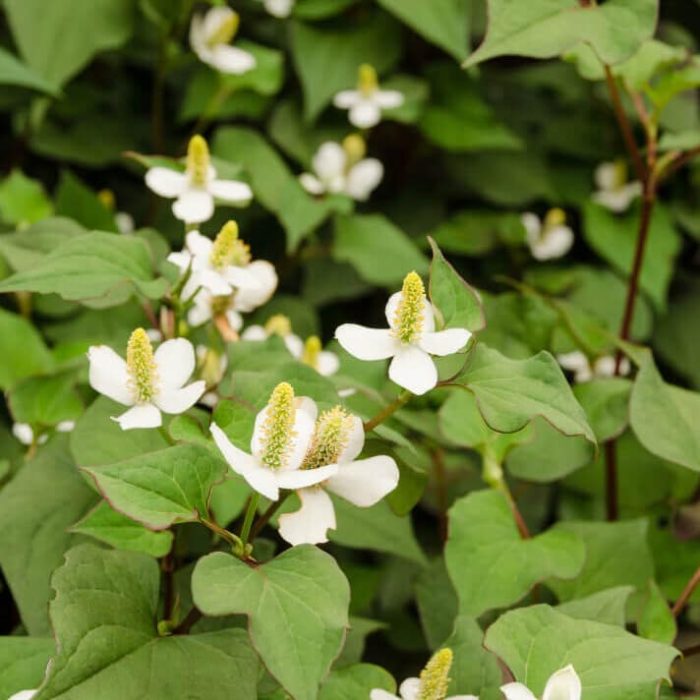
Bindweed sometimes causes confusion due to its green leaves and vigorous growth in gardens or disturbed soil.
Key difference:
Bindweed is a twining vine that wraps around other plants, whereas Japanese knotweed forms upright bamboo-like canes.
Some dogwood varieties produce reddish stems that may resemble knotweed canes during winter months.
Key difference:
Dogwood is a woody shrub with branching stems rather than hollow segmented canes.
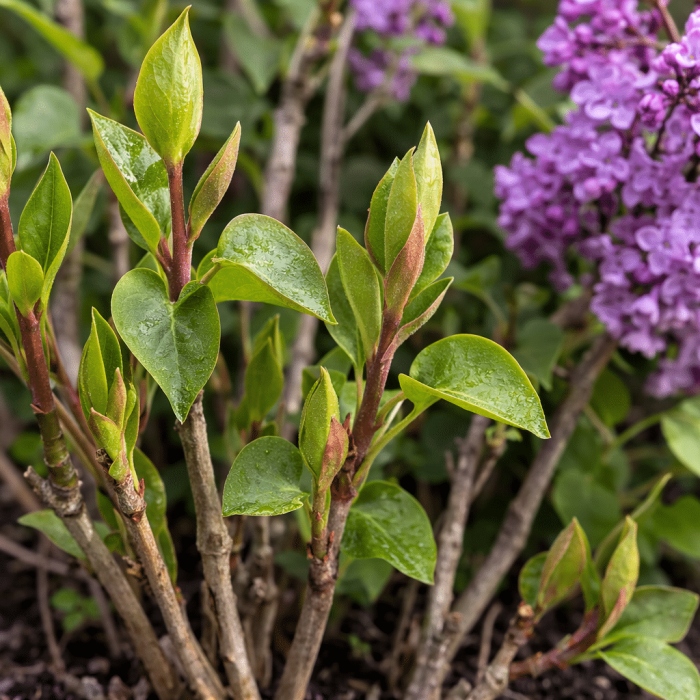
In early spring, new shoots from ornamental shrubs can sometimes be mistaken for knotweed emerging from the soil.
Key difference:
Shrubs develop woody branching stems and stable growth patterns rather than rapidly growing hollow canes.
For a detailed comparison of plants that look like Japanese knotweed, see our guide: What Can be Mistaken for Japanese Knotweed.
Japanese knotweed spreads through an underground root network known as rhizomes. These thick, woody structures grow horizontally through the soil and act as the plant’s energy reserve, allowing it to regenerate year after year. This is also the reason it cannot be easily dug out.
The growth visible above ground often tells only part of the story. A cluster of stems in one corner of a garden may be connected to a much wider rhizome system beneath the surface, quietly extending beyond the area where the shoots first appeared.
As the rhizomes expand, new shoots can emerge at different points along the underground network. Over time this creates the dense groups of upright stems that are characteristic of Japanese knotweed. What may initially look like several separate plants is often a single interconnected system developing below the soil.
Underground growth tends to follow the path of least resistance. Rhizomes move through soil with relative ease, but they may also extend beneath patios, garden paths, retaining walls or boundary structures. Where small gaps or weaknesses exist in hard surfaces, shoots can sometimes emerge through joints or cracks, making the spread of the plant appear sudden or unexpected.
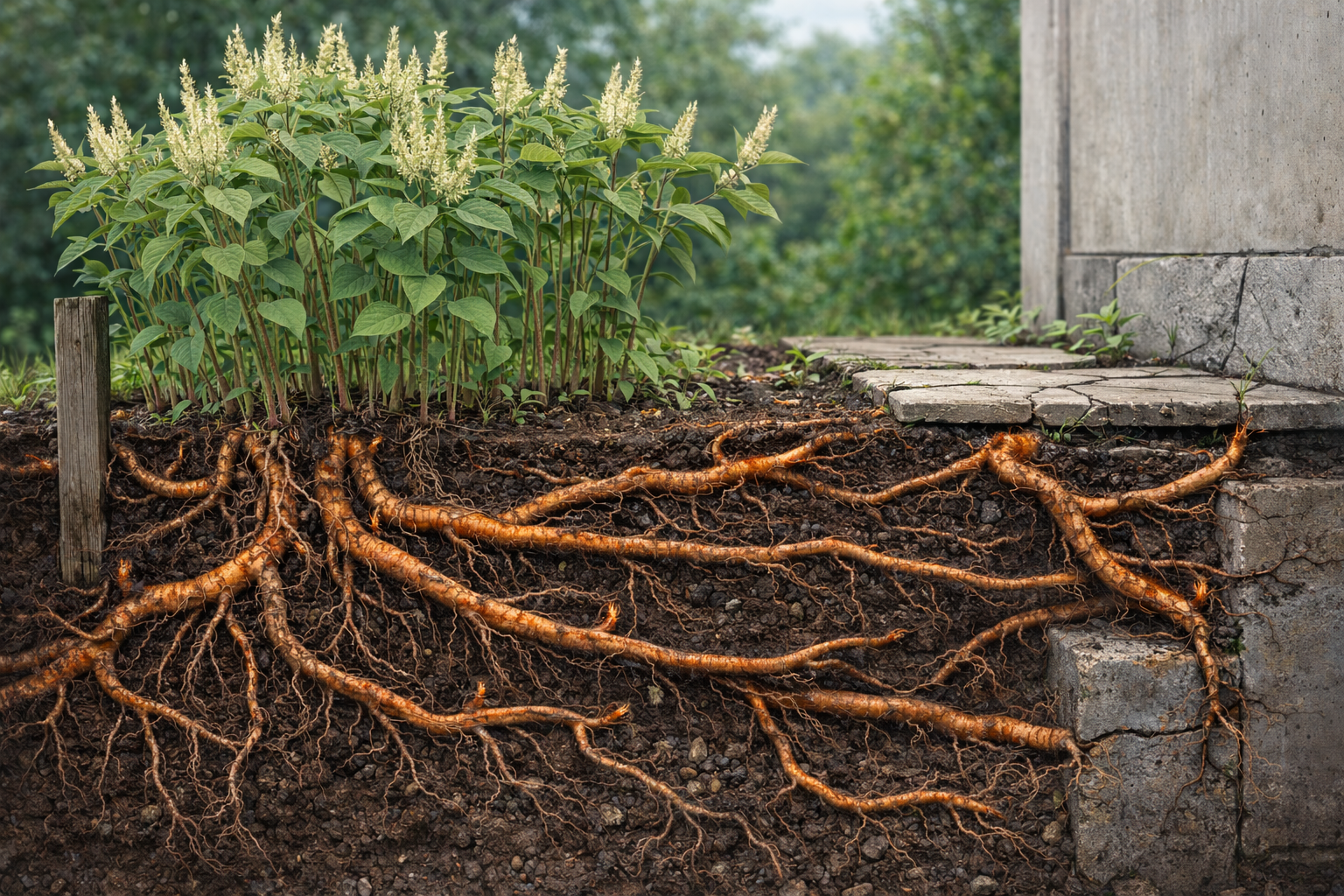
This hidden growth also explains why simply cutting back the visible stems rarely solves the problem. The rhizomes remain active underground and are capable of producing new shoots even after the above-ground growth has been removed.
Seen in this context, a small patch of Japanese knotweed is not always as limited as it first appears. Much of the plant’s activity happens out of sight, developing gradually beneath the soil before new shoots eventually break the surface.
If you suspect Japanese knotweed on your property, the first step is to confirm whether the plant is present. A professional identification survey provides clear answers and practical guidance on what to do next.
Identification is typically carried out by trained Japanese knotweed surveyors, often accredited through professional bodies such as the Property Care Association (PCA), which sets recognised standards for invasive plant management.
A site survey will usually provide a written report confirming whether Japanese knotweed is present, together with an assessment of how far the infestation may extend. Where knotweed is identified, the report can outline appropriate management or treatment options so you understand exactly how the situation can be addressed.
Having this information in place allows you to move forward with confidence. It helps ensure the right action is taken, supports discussions with contractors or treatment specialists, and can prevent delays during property surveys, mortgage checks, or neighbour enquiries.
Confirming the situation early gives you clarity, control, and a clear path forward.
Ready to get professional identification?
Our PCA accredited surveyors will conduct a site survey, and write you a legally standing report on Japanese knotweed, establishing a management plan – all inclusive of your site survey and report.
A site survey starts from £260 + VAT, this is dependent on the size and location of the stand.
Treatment takes place between August -October and we treat once a month for 3 years. We then monitor for 2 years.
Yes. Japanese knotweed is a regulated invasive plant, and where it is present, it must be managed in line with established requirements. The obligation isn’t optional — the key question is what level of response is appropriate for the situation and timing involved.
Yes, but the position needs to be clearly established. Transactions typically rely on professional confirmation of whether knotweed is present, its extent, and whether management or treatment is in place. Uncertainty, rather than the presence of knotweed itself, is what most often causes delay.
Lenders usually require professionally prepared documentation that clearly sets out the findings and any required action. Surveys and reports prepared to an appropriate professional standard are designed to meet those expectations and support lending decisions.
In most cases, yes. A survey is how the position is formally established. Until that point, decisions are based on assumption rather than confirmed information, which can lead to delay or unnecessary cost later.
If knotweed is identified, the survey will confirm its extent and whether action is required. Where treatment or removal is needed, the response is matched to the site, timing, and future use — not applied automatically or disproportionately.
Not every situation requires immediate removal. In some cases, management or monitoring may be appropriate. The correct approach depends on risk, use of the land, and external requirements such as lending or planning.
Timeframes vary depending on the treatment method used. Some approaches provide rapid clearance, while others are longer-term management strategies. Where removal is required, programmes are aligned with transaction timelines or development schedules wherever possible.
Yes. Where treatment or removal is carried out, this is supported by a 10-year company guarantee and a 10-year insurance-backed guarantee, providing long-term assurance for future transactions and ongoing management.