
If you’re buying, selling, or dealing with land in Warwickshire, Japanese knotweed, as an invasive plant species, is one of those issues that often doesn’t feel urgent — until it suddenly is.


In parts of Warwickshire, land planned for development is often shaped by past uses, infrastructure, and areas between urban spaces and open land. On many sites, historic land management and boundary conditions affect what’s underground just as much as what’s visible above ground.
In these situations, we rarely assume Japanese knotweed is present. It’s usually discovered during site inspections, feasibility reviews, or environmental checks. The focus is on how its presence affects site constraints, project sequencing, and planning decisions—not the plant itself.
On sites planned for future development, uncertainty can quickly create risks for the schedule or planning. Until the situation is clear, assumptions can slow feasibility assessments, invite extra scrutiny, and force reactive decisions later in the process.
Whether knotweed stays a manageable issue or becomes a problem and spreads rapidly usually depends on how early it’s identified and how appropriately it’s managed within the wider site context.
Across Warwickshire, land planned for development often includes amenity areas, boundary corridors, or sites shaped by historic land use and infrastructure. These sites are typically assessed through structured surveys, rather than relying on what is visible above ground.
In these cases, Japanese knotweed usually appears during site walkovers, feasibility studies, or environmental reviews. The focus is on understanding site constraints and how it interacts with boundaries, rather than taking immediate action.
Common trigger points include:
At this stage, the focus isn’t on immediate action. It’s on identifying where the invasive weed is, how it affects the site, and what implications it has for future use.
Sites proposed for development offer limited tolerance for uncertainty.
When knotweed is identified and mapped early, its impact can be addressed proportionately within feasibility and planning workstreams. If it goes undocumented, assumptions often persist, leading to later queries, extra scrutiny, or disruptions to project schedules once development plans are formalised.
For landowners, developers, and consultants in Warwickshire, the main concern isn’t whether knotweed is present—it’s whether its extent and impact on the site have been clearly identified at the right stage.
When properly assessed and documented, Japanese knotweed does not automatically block future development or use of land in Warwickshire.
Cases that are unmanaged or unclear can draw extra scrutiny, particularly when sites are adjacent to amenity land, infrastructure corridors, or neighbouring properties requiring a careful management plan of interactions and constraints.
Clear assessment allows proportionate management without escalation.
We provide professional Japanese knotweed surveys, treatment and removal services throughout Warwickshire, including Coventry, Rugby, Nuneaton, Leamington Spa, Stratford-upon-Avon, Kenilworth, Bedworth and surrounding areas.
When Japanese knotweed is present on a Warwickshire site, or flagged as a potential issue during feasibility or due diligence, obtaining site-specific advice based on the project’s stage is the most effective approach.
We establish whether a formal Japanese knotweed assessment is actually needed, based on your specific situation rather than assumptions.
We advise on what type of reporting would be appropriate, proportionate and acceptable to lenders, solicitors or planners.
By dealing with likely questions at the right stage, we help prevent delays, disputes or last-minute requests later in the process.
Handled early, knotweed becomes a managed factor, not a lingering constraint.
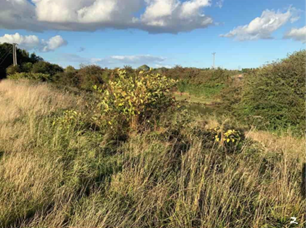
A Warwickshire site proposed for future development, with land adjoining a canal corridor and surrounding amenity areas that contribute to the wider site setting.
A site assessment identified three distinct Japanese knotweed stands along the canal boundary, ranging from approximately 5 m² to 21 m² and varying in maturity. Their location and the surrounding land use could pose constraints if the extent and potential interactions are not clearly understood.
The assessment determined the extent, age, and boundary interactions of the Japanese knotweed, providing the information needed to define constraints within the site and support feasibility and future planning.
By documenting the knotweed’s location early, the constraint was recorded for planning and feasibility, enabling informed decisions on future site use and project sequencing.
Yes. Sites near rivers, canals, rail corridors, or former industrial land in Warwickshire are often subject to closer scrutiny, as ground disturbance can increase the risk of knotweed spreading beyond the site boundary.
Not in every case. However, local planning authorities may expect the presence and risk of Japanese Knotweed to be clearly understood and appropriately managed, particularly where neighbouring land or future site use could be affected.
Yes. Exclusion zones, control measures, or monitoring requirements may need to be incorporated into construction sequencing to avoid disruption or compliance issues later in the programme.
No. The most appropriate response depends on the extent of the infestation, its location, and the overall project programme. In some cases, phased control and management can be carried out alongside development works.
Developers, planning officers, funders, environmental consultants, and project managers may all rely on the documented findings when making informed decisions about site viability and risk.
Failing to address uncertainty early can result in delays, increased scrutiny, or reactive mitigation measures later in the project, often leading to higher costs and reduced flexibility.